
Operated from 1972 to 1996 and produced 119 billion kilowatt hours of energy
Dry cask storage is a method for safely storing spent nuclear fuel after it has cooled for several years in water pools. Once the fuel rods are no longer producing extreme heat, they are sealed inside massive steel and concrete casks that provide both radiation shielding and passive cooling through natural air circulation—no water is needed. Each cask can weigh over 100 tons and is engineered to resist earthquakes, floods, fire, and even missile strikes. This makes it a robust interim solution until permanent deep geological repositories are available. The casks are expected to last 50–100 years, though the fuel inside remains radioactive for thousands. Dry cask storage reduces reliance on crowded spent fuel pools, provides a secure above-ground option, and buys time for nations to develop long-term disposal strategies. In essence, it’s a durable, self-contained “vault” for nuclear waste
If you drink that you gain super powers.
Will I become big and strong?
For a few minutes.
Who certified the casks? If it was a private corporation, forget about the 50 to 100 years.
I don’t trust modern US corporations to manage anything.
How long until people can live near Chernobyl?
People could live near Chernobyl on day one.
I get what point you’re trying to make but it still is kind of ironic you’re using a very distinctly communist failure which happened due to the communist power structure every step of the way as the example here.
Three Mile Island came pretty close to a similar fate. That almost happened and didn’t because of a very brave whistle blower. But at its root, companies tried to cut corners because of a profit motive. I.E. a huge capitalist failure. When utilities and things relating to survival needs for people are tied to whether a company can make money off of it or not, they will find opportunities to gouge, cut services, or simply not reinvest into maintenance. The failure of the Texas power grid during the freeze a few years ago is another great example of this.
Looking at the global warming crises, I don’t have faith that humanity as a whole is responsible enough for safely handling nuclear facilities. Chernobyl is now in a warzone. I think Fukushima is still uninhabitable. Our monkey brains and 80 year lifespans blinds us from the consequences 200 years from now.
I hope I’m wrong.
modern nuclear designs are pretty much unable to melt down. they’re properly failsafe. storage of nuclear waste is in a completely different category to active nuclear, and Chernobyl afaik was a flawed design for its time
modern nuclear designs are pretty much unable to melt down.
Some gifted idiot at a nuclear plant
"Hold my beer.*
So I guess the high security double fencing is not necessary then?
Depends on your definition of necessary I guess? It is perfectly safe to hug the caskets. The fences are there in case someone wanted to intentionally sabotage them.
That’s to keep the radiation in.
I mean nuclear energy is fine and all, but i’d argue that solar is still better.
Think about it:
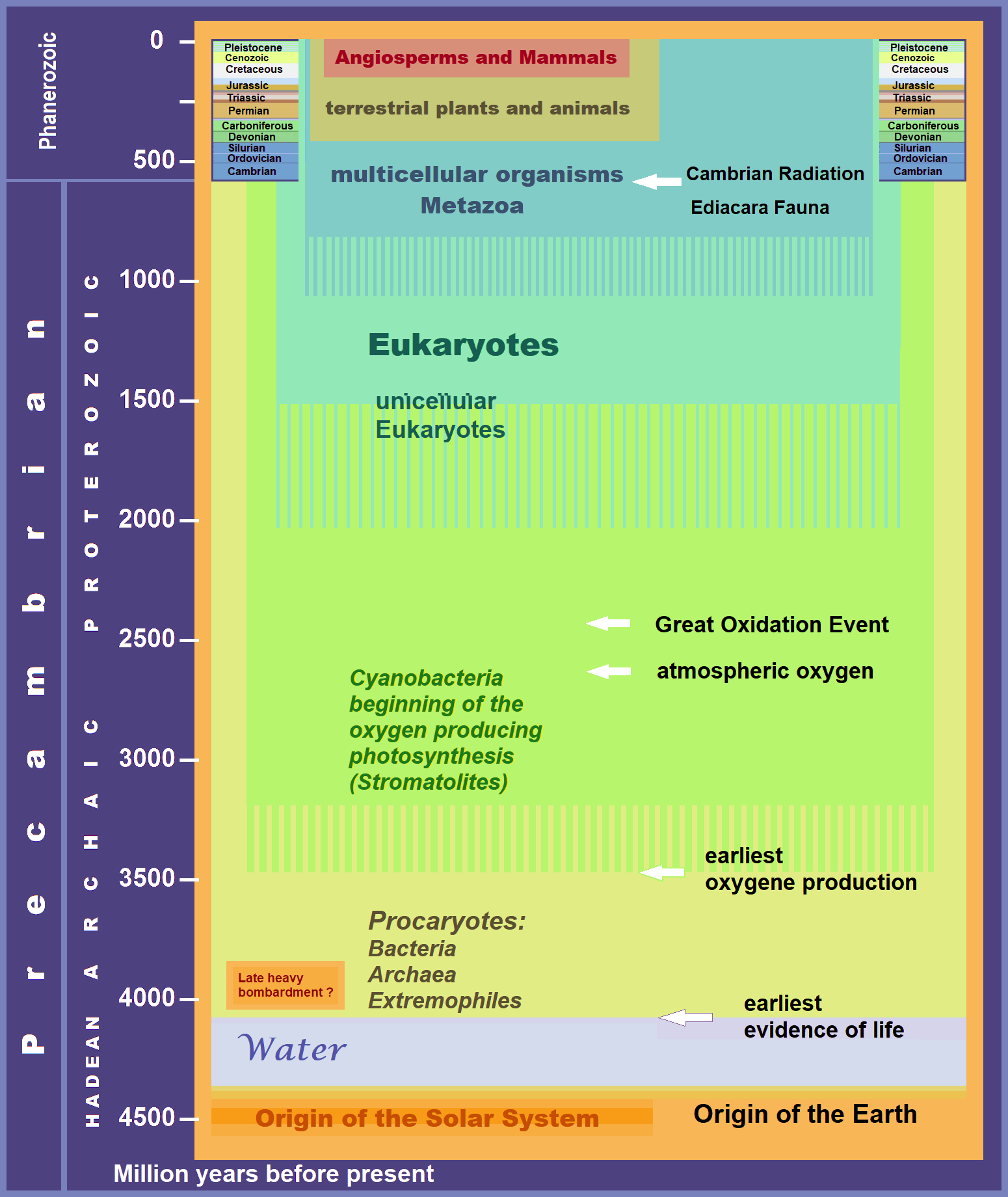
Cyanobacteria and their photosynthesis (essentially generating energy out of sunlight) was the foundational breakthrough that allowed life to expand all across the planet and feed multi-cellular organisms, give rise to the modern variety in life that we see.
Solar panels are like photosynthesis (kinda), just on a more technical level. If nuclear energy would have been significantly cheaper in the last few decades, solar energy might not have been developed in the first place, because there would have been no perceived need for it, so we’d be stuck with nuclear.
But it is important that solar energy is available, and so it’s a good thing that cheap nuclear power didn’t prevent solar energy from happening. We should be thankful.
Both are good.
How much waste does solar produce for the same amount of energy to be delivered? A quick calculation from a very generous 30k kWh per solar panel lifetime results in almost 4 million solar panels for same amount of energy. How much of that waste would end up in a garbage heap? What is the environment cost to mine the materials for those solar panels? The environmental cost of the land needed to deploy them?
Saying “it’s like photosynthesis” is the most useless, reductionist analysis you could possibly do.
The environmental cost of the land needed to deploy them?
I did some quick maths a while ago and figured out that it’s approximately 3% of our total land use.
The reason why nuclear is necessary is because of scale. Solar can’t scale up fast enough to even meet demand, let alone exceed it. Nuclear can. But both is good as well, we can do as much solar as we want and then make up the gap with nuclear.
But both is good as well, we can do as much solar as we want and then make up the gap with nuclear.
I think solar will eventually become more effective and ubiquitous, but indeed nuclear should be the gap in the meanwhile. Unfortunately, folks on either side of the debate are dogmatic thinking it’s one or the other instead of being pragmatic.
I used to be anti-nuclear, but with the rate of how bad climate change is getting, we need the nuclear power as the stop gap while we ramp up solar and other renewables. Even my boss who has an environmental degree was anti-nuclear but turned around. The vehemently anti-nuclear think we are going to build more nuke plants. Building new plants are indeed expensive, but those in the middle think we should not build more, but instead advocate not shutting down the already existing plants until other renewables catch up.
Moreover, and this is also a hard to swallow pill for many, much of the anti-nuclear sentiment has roots from Soviet disinformation campaign during the Cold War, especially in West Germany to malign nuclear energy. The Soviet Union was afraid that West Germany’s civil nuclear programme might turn to a military one. That disinformation campaign still lingers in the minds of many not just in Germany but have spread across the globe.
Absolutely you get it!
Solar can’t scale up fast enough to even meet demand, let alone exceed it.
Based on what argument?
The main problem with solar at a large scale is that it has large variables in base load power. Meaning it’s efficiency is dependent on things like weather and time of day.
The theoretical solution to this is battery storage… However, battery tech at a scale large enough to make solar a viable solution for our immediate power needs is doubtful with our current technology and resources.
Batteries are also a consumable resource that require rare earth elements currently being mined by the modern equivalent of serfs.
The theoretical solution to this is battery storage… However, battery tech at a scale large enough to make solar a viable solution for our immediate power needs is doubtful with our current technology and resources.
First of all, those are theoretical projections of cost benefits over time based on the most opportunistic climate anyone could come up with, and has nothing to do with scaling.
Secondly Lcoe isn’t exactly the best way to determine what would be an optimal source of power for any given use. A lot of nuclear power’s marketable sources of revenue deal with industry that needs sustained and high capacity outputs.
Edit: also, their cost analysis is based on some pretty dubious means. They aren’t exactly generous with providing their sources and this wasn’t exactly easy to find.
In 2024 alone, average battery prices fell by 40%, hitting a record low of $165 per kWh for a full battery system (excluding Engineering, Procurement and Construction and grid connection costs).
How well do you think their cost and benefit analysis would do if nuclear power got to ignore engineering, procurement, construction, and grid connection?
I’m not saying that solar is a bad thing, it’s just not appropriate dependent on scale and intention.
Corporations haven’t figured out how to monetize it, so it is nonviable.
I think the companies that make the panels might have figured it out. The companies deploying utility-scale solar farms might have too.
Corporations haven’t figured out how to monetize it
Math
Only the math that says corporations will have slightly less profit year over year.
This has absolutely nothing to do with profit, if nuclear became ubiquitous then it wouldn’t be very profitable either. I’m also saying that we can do as much solar as we want and it’s still not good enough. So please, do more solar but don’t stand in the way of nuclear while you’re adding solar.
What I don’t get is if the waste is emitting enough radiation to be harmful, why don’t we use it to make power.
Power generation is all about thermal differential.
If the differential is too low, then your power generation either doesn’t work or is incredibly inefficient.
Spent fuel is not radioactive enough to produce a large enough thermal differential to run steam turbines. In some cases it can be reprocessed through some expensive means and then used again. However, the key word here is expensive. It’s considerably more economical to use new fuel than it is to reprocess old fuel.
Breeding reactors are a thing but their economic viability is questionable.
Dump it in water, heat it up, use the heat for heating. You don’t need it to be the most efficient, you only need to not waste it.
Levels far too low to be viable energy sources can still be biologically harmful.
Nuclear energy is downright silly. “These rocks get really hot when we put them close to each other, let’s boil water with it to turn turbines” lmao like something outta the scp foundation
Precisely modeling how hot they get is very important, heh.
Computers run on magic runes written in gold.
on top of that, the information represented within them modifies itself, like characters dancing around and shaping new patterns, hence the nickname of “dancing spirits”
Pretty much all of our electricity is boiling water to spin turbines, even hydro except with that we wait for it to recondense to spin the turbine. Wind and solar are the only large scale exceptions, and even then some solar is boiling water instead of PV.
Even wind is just using a windmill to spin a turbine, Solar and some very limited small scale thermocouple power sources are our only non wheel based power sources.
Very odd and hyper simplified take on it.
Even weirder when you think about cpus. “Here’s a rock we filled with lightning and tricked into thinking.”
until permanent deep geological repositories are available
I have been growing up with the outlook that one day we might find these yet somehow this promise/hope still sounds exactly the same many many years later
Research takes time, and it’s not like there’s a ticking clock or anything, the uranium is just going to sit there until we do something with it. It’s not as if the uranium is going to get bored and suddenly explode or something.
I think the main reasoning why permanent solutions haven’t been “found” yet is because we still closetedly believe that we will find a better use for the waste if we just wait a few more decades.
it would be a shame to bury all that waste under 1000 meters of concrete now only to find out you can re-use these spent fuel rods for another round in the reactor in 2050.
You can reprocess then and run them through breeder reactors, but no one has proven you can make money doing it.
That biggest reason no one has permanent storage sites is political. There will always be loud protests at any proposed site.
I think the nice thing about breeder reactors isn’t so much that they produce additional energy or are economically profitable on their own, but that they have the potential to eliminate nuclear waste that has accumulated in the last few decades, therefore effectively eliminating the storage problem.
Consider this: Storing nuclear waste costs something. A country might pay $1bn to store its nuclear waste for a hundred years. Instead, it could give that money to breeder reactors so they get rid of the nuclear waste permanently.
Breeder reactors don’t have to be profitable only by producing electricity. They have another selling-point, and that is that they eliminate the nuclear waste for good. That’s also worth something, and politics might be willing to pay for it at some point.
The current situation in the US is that private industry builds and runs the reactors, but the federal government has promised to take care of the waste. So either the breeder reactor needs to be commercially viable, or the government needs to run the reactor and push in on private sector businesses. I’m not sure which would be more difficult to achieve, honestly.
In Germany we already found suitable places but lobby work and local governments worked against it and now it’s in moist mines in leaky barrels.
The problem with DGRs is the resistance from uninformed locals and environmental groups, on a technical level we know how to build them and how to make them safe.
I thought the problem was SEP fields. Because as soon as you’ve found an ideal location for a facility all the locals come out (probably in part funded by oil companies) and are like “this sounds great but not here”.
Americans also know how sloppy US contractors get.
Why not just mix it to trace amounts with sand and deposit in a biologically dead zone?
Well, it’s usually planned deep underground (and in rock that’s unlikely to have water or earthquakes running through) in hopes of it remaining undeterred for as long as possible. If you were to dump it in the desert, then winds or the occasional rain might still carry it all over the place.
Ok, but mixing it with gravel for the final depot would still make it saver.
Outside the environment you mean?
I mean, we dig it out of the earth, concentrate and refine it. So the problem is the concentration, no? Geologically dead and whatnot are requirements for a final depot, because the high concentrated radioactive and poisonous stuff is a disaster waiting to happen.
But mixing it with gravel/dirt for a final depot might be safer too.
I’m just confused by what you think a biologically dead zone is?
Why would we want to store it out in the open when we can just store it in a giant underground chasm somewhere. How does mixing it with sand make it less radioactive.
I thought more of marine dead zones, because slightly poisonous and radioactive gravel/sand could still be a problem. But maybe forget that.
But still, instead of one hole with high risk, 5 holes with medium risk might be better.
24 years of waste? I find it immensely annoying that this is 8 x 4 pairs of casks and not 6 x 4. We should just dump a couple of columns, it will be much neater then.
“The casks are expected to last 50–100 years…”. Let’s see 2025-1972=53 years. Sounds like it is nearing time to start replacing these or to figure out a better solution to reuse the high level waste.
“High level waste,” basically by definition, has a half life of ~30 years. So down to a quarter of the radioactivity after 60, 1/8 after 90, where they’re likely easier to repackage.
Behold: Breeding
I mean, breeder reactors…
I’m pro-nuclear power. don’t get me wrong. but…spent nuclear fuel does not account for all the radioactive waste produced in fission power production. even the majority of it by mass or volume. low and intermediate radioactive waste represents a MUCH larger footprint
alright, low and medium level radioactive waste is large in volume, but it is low(er) in radioactivity. how dangerous is it really? what security mechanisms have to be present to ensure it doesn’t contaminate the landscape? Would it be okay to just dump it somewhere in the great canyon or the rocky mountains? Would it reasonably do any harm there?
Would it be okay to just dump it somewhere in the great canyon or the rocky mountains? Would it reasonably do any harm there?
I wouldn’t put it anywhere near a water table if you want to keep consuming that water.
it needs to be protected from weathering.
Yucca mountain was ideal for a lot of reasons - remoteness, stability, but I suspect there are many similar places - also mines. the good thing re: this waste vs fuel waste is it’s relatively low half life will render it ‘cool’ in a few hundred to a few thousand years.
Same goes for the industry behind making photoelectric panels, etc. Fusion would also have a lot of side waste due to neutron bombardment.
Same goes for the industry behind making photoelectric panels,
I’m not sure how to parse this. are you suggesting that PV production involves radionucleotides?
the recycling of photovoltaic panels has improved enormously over the last decade, and made huge leaps in just the last few years. In some ways, it’s becoming a focus for providing new panel production because the recycling can be quite profitable:
"In 2004, according to Germany’s state-owned Fraunhofer Society, Europe’s largest institute of applied-engineering research, one watt of solar power required about sixteen grams of polysilicon; this has dropped now to about two grams. As Hannah Ritchie, a data scientist and a senior researcher at Oxford University, calculated recently, “the silver used in one solar panel built in 2010 would be enough for around five panels today.”
re: Fusion - yeah, irradiated hardware is going to be a real thing, but we don’t really have much of an idea how much of it will be produced. to be determined imho.
I’m saying there is an environmental cost to all energy generation, you have to include the whole process. In this case it is the mining of the rare earth metals used to produce them.
valid.
Where does it go?
Yucca Mountain
up ya bum
Very much so. Anything that gets too hot has to be interred.
Wow. That’s excellent perspective on how little waste nuclear plants create!
Now compare it to how much fly ash a coal plant produces.
It’s even more efficient these days. French reactors produce miniscule amounts of waste
What ever happened to Yucca Mountain? I thought that was supposed to solve America’s nuclear waste problem for good.
They’ve been talking about that since I was in primary school in the 1980s.
The problem is the weak railroad and interstate infrastructure. There are too many derailments and crumbling bridges to transport such ‘hot’ materials safely. There’s also the danger of hijacking and making of dirty bombs.
If the cylinders in the OP can withstand missile strikes (supposedly) why would a derailment be a problem?
Because mountain > missile
/j
Probably what happens to all these projects.
Maybe Nevadans don’t want that in their backyard? Or maybe they oughta at least get serious compensation for it.
But they don’t get a say.
For what? The existence of something?
“Not in my back yard” is the biggest cause of so many issues in the world. Get over it.
For argument’s sake, let’s say you live near a disposal/storage site.
It’s underfunded, so it leaks into the groundwater. Or maybe they don’t catch a leak in time. You develop cancer because of radiation because you live close to the storage/disposal site.
It’s not an uncommon scenario. Fracking has done this with wastewater being pumped back into the ground (https://news.yale.edu/2022/08/17/proximity-fracking-sites-associated-risk-childhood-cancer), and even places like Whidbey Island in Washington state have dealt with forever chemicals leeching into their groundwater (https://www.whidbeynewstimes.com/news/navy-expands-testing-of-wells-for-forever-chemical/). Yes, we need a storage site, but people should have a say about what is stored near where they live… whether it makes a difference or not.
You’re not wrong in that people should have a say in what is stored where. But…
I can’t say that no one lives near Yucca Mountain but almost no one lives close to it.
Yucca Mountain was considered because its a mountain of solid granite without an aquifer under it.
It also has to be transported there. One of the long running arguments is that this just uses up their roads and highways and cones through their state without their knowledge or compensation.
Look at the train derailment that have occurred.
The general public is unaware how nuclear waste works. Their fears are valid and it is their state, not everyone else’s. The federal government is arguably flippant about it.
I love how you take the sins of the fossil companies and try to make nuclear responsible for their actions. It’s almost like the problem is the unhinged capitalism and lack of regulation and not the nuclear power itself.
Nuclear is great. I never said it wasn’t. My point is that no storage solution is perfect and communities should have a say in what is stored near them.
Comparing fracking to nuclear waste is comparing apples to oranges. These are literally one of the most carefully handled materials in the world. We aren’t just dumping them in a pit and forgetting about them.
I’m not anti nuclear by any means. All I pointed out was that people should have a say in something that has the potential to cause health impacts on their communities.
This makes it a robust interim solution until permanent deep geological repositories are available.
Molten Salt Reactors can mostly eat these; until the newer ones come out that can eat these more easily.
Technology will find a way, with proper resourcing.
Technology will find a way, with proper resourcing.
And research. It has been illegal to do research on nuclear power in some countries for decades. And then they go “SeE, nO iNnOvAtIoNs!”
Which countries?
Are you talking about illegality to enrich to a level beyond that required for civilian use? Like Iran?
there’s an awful lot of people here that don’t understand volume over output. this is a small amount for 24 years when compared to the volume of toxic waste that fossil fuel plants put out.
Even the amount of radiation is lower, as coal power plants output quite a bit of radioactive material