I’ve run Pi-hole in my homelab for years and benefited from using the service. As well as the hands-on education.
With that said, what is everyone else’s experience with the software? Do you use Pi-hole in your homelab setup? I would assume many hundreds of thousands of people use Pi-hole.
Edit #1:
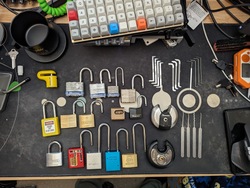
The image attached to this post is my RPi 5, which hosts the Pi-hole software. Big supporter of the whole “SBCs for learning and home improvement” mentality.
Edit #2:
It is interesting to see the broad support for Pi-hole and DNS blockers in general. The more options, the healthier the tech ecosystem is, which benefits everyone.
I have that virtualized, times three. Two to have a failover, and third one with different settings for my kids (cloudflare’s family dns)
Holy moly. Mine is virtualized as well, but with no fail overs.
I have run Pihole on 2 physical Pi 4s (DietPi OS) with config sync for 3 years now. Core to the house. Very reliable.
I run pi-hole in docker in the background of our libreelec (Kodi) home entertainment system and it works great. It’s a MUST if you have kids, my son has more freedom to use the internet since I know he is mostly covered by extensive block lists. Using raspberry pi 400, we watch Netflix, play Nintendo games, watch YouTube and have a family hard drive for shared photos and files.
I used pihole for years, but the recent updates made me look for alternatives. There was a major (v6?) update fuckup, but also some random freezes and block lists going missing…
Looking for alternatives, I tried out Technitium. Extremely easy to set up, rock solid, running steady for about 6 months (with frequent updates), and they recently introduced built in high-availability.
My pi 1b handles the internal DNS for my game servers, which at this point is actually just minecraft because PSO:BB was way harder to setup than I thought. It works and it is extremely easy and it still holes all the tracking stuff too.
I switched to https://github.com/0xERR0R/blocky
Pihole was fine, but had features I didn’t care (mostly UI). Blocky is much smaller and lightweight
I am one of those zillion users. I love it.
I feel bad for households without a nerd to set up the family pihole
Like families where nobody cooks
You have never had some family member experience a broken website that they needed to work but you were not around to fix it on the server side?
I set a separate SSID on the wifi without the pihole as the DNS provided by DHCP that they can use.
That’s the reason I no longer have a pihole…
This. I use pihole as just a DNS server with blocking off since it was too much to have to deal with the random broken pages.
PiHole 4b powering my home DNS. Been running for ~4 years as of next month (and still on the original SD card I installed it to!). 100% recommend.
and still on the original SD card
incredibly lucky. my Pi burned through so many cards I wouldn’t use it for a pihole again, especially when mini pcs are better and cheaper
(and before anyone asks yes I was logging to ram)
3B on the original SD card still. But I also use log2ram to help reduce writes to the SD card.
I run a pi-hole on a pi 3 and another in a container in docker. Something rarely goes wrong with both and I have a script that sync them.
I replaced their google with searxng, but in the end, they needed ads for their free to play games, so I had to turn it off for them.
PiHole works great. I get 20% of requests denied and it really helps keep ads and unwanted sites to a minimum. It was easy to setup. I just update it via ssh once every 60days or so.
The stats are kinda revealing also as to the sites the household uses .
Maybe a controversial take, but I like pihole for blocking only - I have a pair of powerDNS servers set up for my internal name resolution. They recurse to Pihole, but can fall back to internet DNS servers if Pihole isn’t responsive.
I tried pihole for local resolution and found it to be a fairly large pain to automate. Plus kubes has PDNS hooks for auto-updating DNS entries.
I ran pi-hole on my NAS. Then I pointed my router at it to make it the DNS for my whole network. The only problem was it would create issues when I had a power outage. If things didn’t start up with the right timing they would get wonky and certain devices would report as not having Internet.
That’s why I bought an OpenWRT One so I could install an equivalent to pi-hole on in directly. Though I hit a snag with that and don’t currently have that running.
I haven’t noticed much of a difference without the pi-hole running (my NAS is dead right now). I think some of my devices had their own DNS settings so they weren’t using the config from the router.
It’s great. Gets things done. I even have it for my office. About 20 people there.
I love it! It took me a bit to iron out all the kinks with my network, but I am completely happy with it now.
I use technitium, but there is nothing “wrong” with using a pihole. I used to run several (containers, plus one physical), and have set up quite a few for family and friends.