You’re not addressing my criticism at all here. Yes, I get it: you can slide back and forth between kilometers and millimeters with the greatest of ease. Cool. Awesome.
My criticism isn’t about the ease in converting. My criticism is more “when are we actually using that feature?”
And the answer is, of course, “rarely”. Rarely do we find a practical need for a single measurement with both the magnitude of a kilometer/mile and the precision of a centimeter/inch.
As a practical matter, the ability to easily make that conversion is nice, of course. But not particularly useful.
first of all that’s not a criticism. criticism would be pointing out a fault.
second of all i gave you an example of when you would use it. when you have sizes too small or too big, it’s just easier to switch to the other unit. again, the point isn’t to have easy conversion between a km and cm, it’s to have easy conversion between all steps.
it’s funny how you’re not addressing the fact that I’m telling you that you can’t even easily switch between feet and inches, two of the closest and most frequently used units, but you keep bringing miles into it as if the entire reason we have the metric system is just so we can cover km to cm. why are glossing over being able to instantly convert cm to mm and vice versa? what about m to km? yeah because that’s much more useful and common so your entire argument would crumble.
forget miles. tell me how many feet 17.05 inches make. you can’t which is why you’re always forced to use double units, feet and inches, and you still have to use fractions or decimals on top of that because inches aren’t precise enough for anything to begin with. covering 17.05" to 1’ 5.05" just makes it more complicated for no reason. not to mention it’s terrible notation and looks messy as fuck when you’re writing dimensions.
it’s funny how you’re not addressing the fact that I’m telling you that you can’t even easily switch between feet and inches, two of the closest and most frequently used units,
Again, why would I convert them?
If I need to cut a board to a precision of inches, why would I even bother with feet? It’s 119 inches, not 9’11" (9-foot 11-inches). It’s 987 centimeters, not 9 meters, 87 centimeters. You’re not going to hear “foot” when building an American house, because everything is done in inches.
I’ve got a tape measure that doesn’t even have foot markings, but multiples of 16" are marked, because our wall studs are commonly framed on 16" centers.
That is the point I am trying to convey: conversion is rarely important in practice. Just start with the unit that provides sufficient precision, and don’t bother switching. There are plenty of good reasons to use metric, but in practice, unit conversion just isn’t one of them.
tell me how many feet 17.05 inches make
Why would I ever need that in feet? You’re just not paying attention here.
I don’t have .05" markings on my tape measure. I could get to 17.125 (17-1/8") or 17.0625 (17-1/16"), or just 17", depending on the degree of precision needed.
To even get a measurement of 17.05", I’d need to be using an 18" micrometer, as we do use decimal inches in machining. But again, we wouldn’t use “feet” at all for such a measurement. There is no practical purpose in making that conversion.
Metric or imperial, the chosen unit implies the degree of required precision. If I’m using feet, I don’t need precision tighter than half a foot. If I need precision tighter than that, I’m not using foot.
Btw how much concrete i should mix when i need 4 inch deep, 37 feet long and 13 feet wide pour, there is also 3,5 feet x 6 feet alcove. Lets add large pole or some other round shape on the mix with diameter of 46 3/4 inches on the middle of the structure.
Wonder how many trips i nees to make to the hardware store when one bag of the concrete weigts 94 pounds and it makes 4,5 cubic feets of cement.
one bag of the concrete weigts 94 pounds and it makes 4,5 cubic feets of cement.
Based on that sentence, I’d say you should retain the services of a professional for such a task. The basic geometry is trivial, as you well know. It’s everything else that is going to get you into trouble.


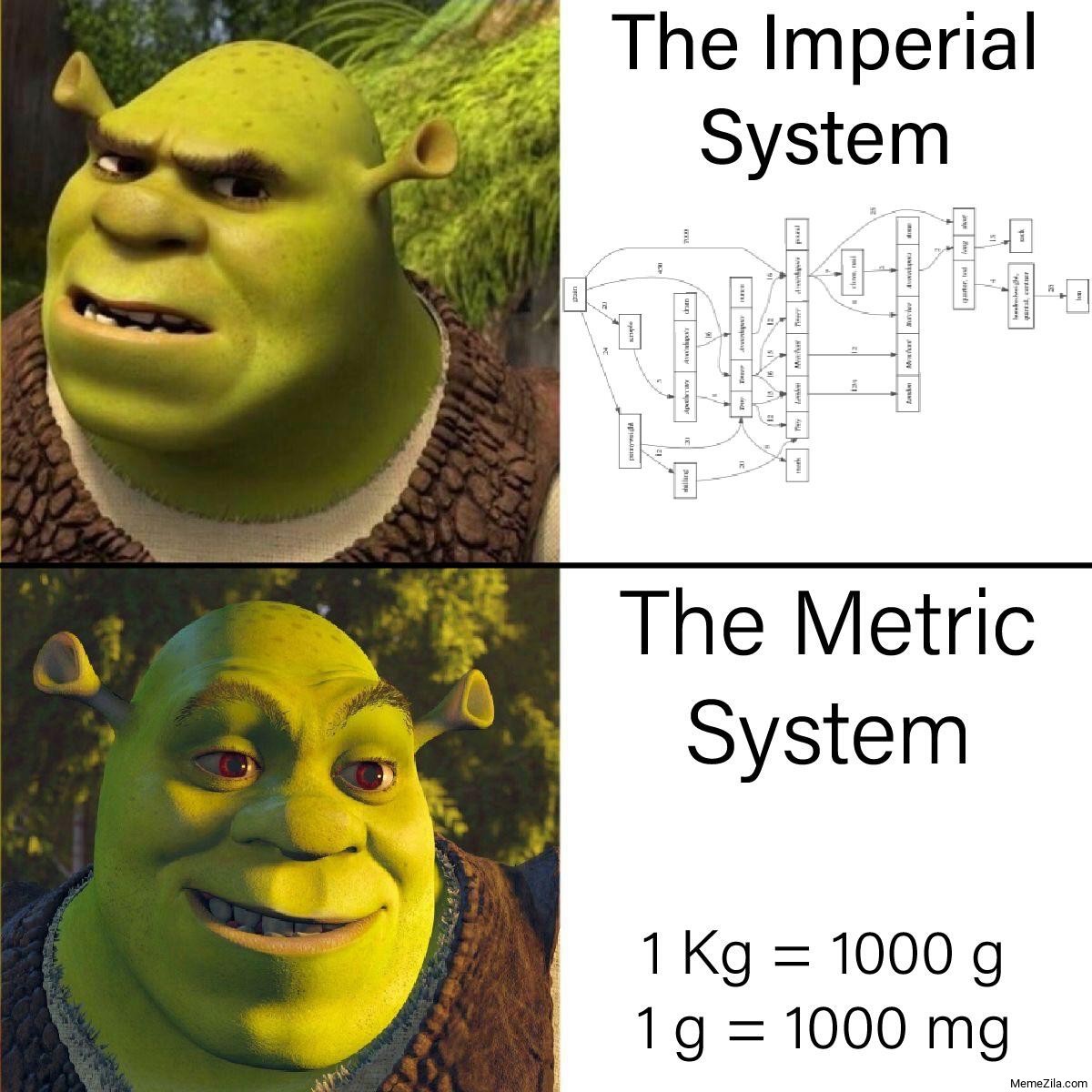
You’re not addressing my criticism at all here. Yes, I get it: you can slide back and forth between kilometers and millimeters with the greatest of ease. Cool. Awesome.
My criticism isn’t about the ease in converting. My criticism is more “when are we actually using that feature?”
And the answer is, of course, “rarely”. Rarely do we find a practical need for a single measurement with both the magnitude of a kilometer/mile and the precision of a centimeter/inch.
As a practical matter, the ability to easily make that conversion is nice, of course. But not particularly useful.
first of all that’s not a criticism. criticism would be pointing out a fault.
second of all i gave you an example of when you would use it. when you have sizes too small or too big, it’s just easier to switch to the other unit. again, the point isn’t to have easy conversion between a km and cm, it’s to have easy conversion between all steps.
it’s funny how you’re not addressing the fact that I’m telling you that you can’t even easily switch between feet and inches, two of the closest and most frequently used units, but you keep bringing miles into it as if the entire reason we have the metric system is just so we can cover km to cm. why are glossing over being able to instantly convert cm to mm and vice versa? what about m to km? yeah because that’s much more useful and common so your entire argument would crumble.
forget miles. tell me how many feet 17.05 inches make. you can’t which is why you’re always forced to use double units, feet and inches, and you still have to use fractions or decimals on top of that because inches aren’t precise enough for anything to begin with. covering 17.05" to 1’ 5.05" just makes it more complicated for no reason. not to mention it’s terrible notation and looks messy as fuck when you’re writing dimensions.
Again, why would I convert them?
If I need to cut a board to a precision of inches, why would I even bother with feet? It’s 119 inches, not 9’11" (9-foot 11-inches). It’s 987 centimeters, not 9 meters, 87 centimeters. You’re not going to hear “foot” when building an American house, because everything is done in inches.
I’ve got a tape measure that doesn’t even have foot markings, but multiples of 16" are marked, because our wall studs are commonly framed on 16" centers.
That is the point I am trying to convey: conversion is rarely important in practice. Just start with the unit that provides sufficient precision, and don’t bother switching. There are plenty of good reasons to use metric, but in practice, unit conversion just isn’t one of them.
Why would I ever need that in feet? You’re just not paying attention here.
I don’t have .05" markings on my tape measure. I could get to 17.125 (17-1/8") or 17.0625 (17-1/16"), or just 17", depending on the degree of precision needed.
To even get a measurement of 17.05", I’d need to be using an 18" micrometer, as we do use decimal inches in machining. But again, we wouldn’t use “feet” at all for such a measurement. There is no practical purpose in making that conversion.
Metric or imperial, the chosen unit implies the degree of required precision. If I’m using feet, I don’t need precision tighter than half a foot. If I need precision tighter than that, I’m not using foot.
Sure.
Btw how much concrete i should mix when i need 4 inch deep, 37 feet long and 13 feet wide pour, there is also 3,5 feet x 6 feet alcove. Lets add large pole or some other round shape on the mix with diameter of 46 3/4 inches on the middle of the structure.
Wonder how many trips i nees to make to the hardware store when one bag of the concrete weigts 94 pounds and it makes 4,5 cubic feets of cement.
Should i just eye ball it?
Based on that sentence, I’d say you should retain the services of a professional for such a task. The basic geometry is trivial, as you well know. It’s everything else that is going to get you into trouble.
Yeah. Sorry i mixed cement and concrete up. You know. That can happen when you writing in language that is only your third most proficient.
And nice evasion for reacting to the example.
by the sound of how they measure things with imperial units you might as well eyeball it.