I’ve never had a problem with YouTube ad blocking. uBlock Origin + ProtonVPN (NetShield) works just fine for me. I haven’t seen a single ad on YouTube since I installed them.
Yeah… I assume not as well. Whatever, I’m only on iOS because I can get the phones as family hand-me-downs, and I’m trying to spend less money on devices I’m constantly trying to use less rather than more. If this method works, I’ll be pleased, but I’m not too desperate for a solution if it doesn’t.
Reason is because the desktop version of YouTube is (still mostly? I think it’s depends on the content) using client side ad serving. On the iOS and Android app, you are getting server side ad serving, meaning the content and ads are coming from the same CDN address. So if you were to block the ad manifest address in Pi-Hole you’d also be blocking the content.
Pi-Hole only really works in a client side served world. Server side it’s harder if not impossible to get around. Server side implementations are more expensive to deploy, so that’s why it’s not as universal.
It’s not clear to me exactly how New pipe and Vanced get around it, but I’m assuming it’s just a browser wrapper?


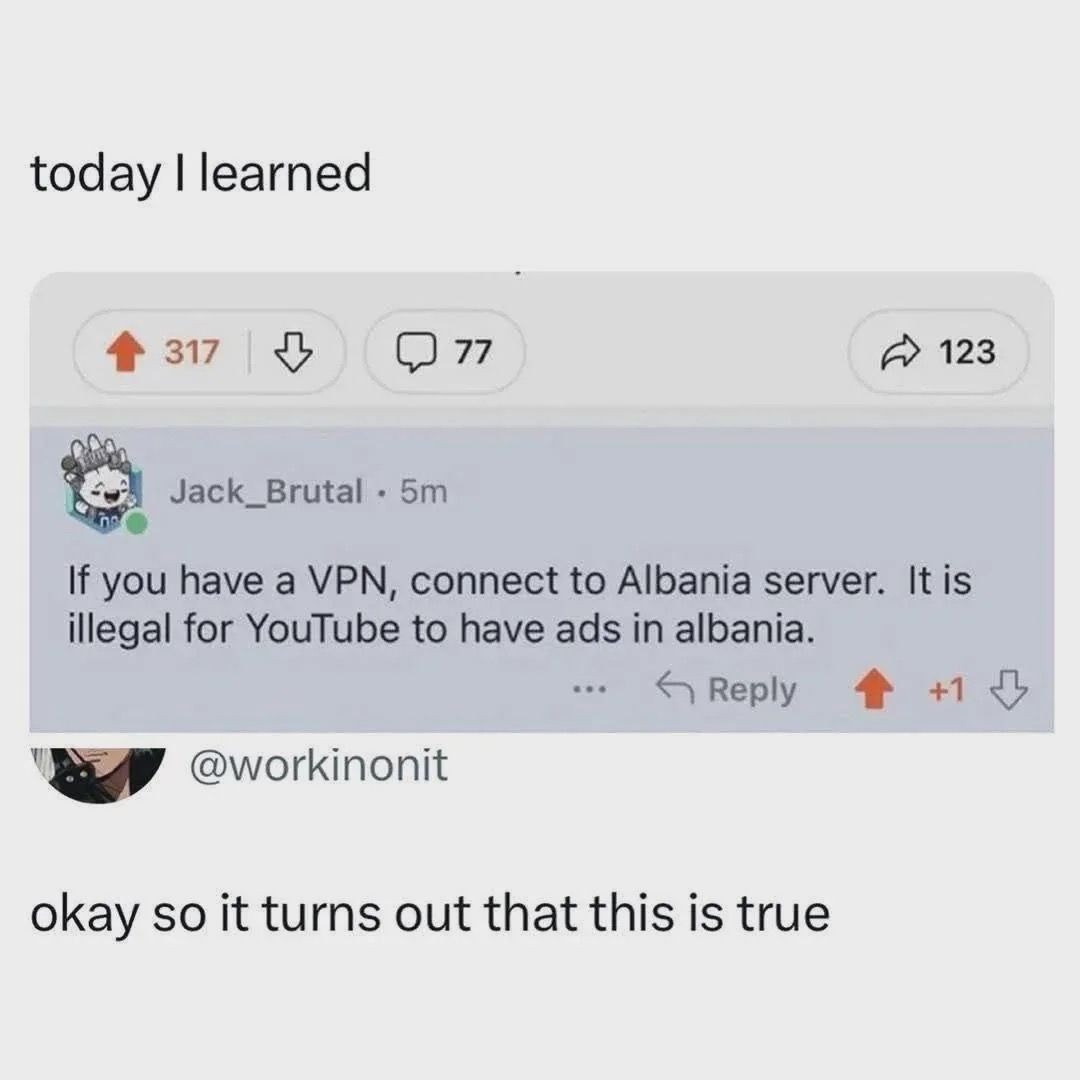
I’ve never had a problem with YouTube ad blocking. uBlock Origin + ProtonVPN (NetShield) works just fine for me. I haven’t seen a single ad on YouTube since I installed them.
Mhm, I believe ublock does work, but I almost never use YouTube on a desktop browser. PiHole/NordVPN haven’t had any success on the iOS app.
use a 3rd party client, and if there isnt any for ios, well thats because ios is a platform that is activeltly hostile to developers
You can have firefox+ublock on Android. Idk about iOS though. Since apple is a monopoly and a bitch with browsers.
Yeah… I assume not as well. Whatever, I’m only on iOS because I can get the phones as family hand-me-downs, and I’m trying to spend less money on devices I’m constantly trying to use less rather than more. If this method works, I’ll be pleased, but I’m not too desperate for a solution if it doesn’t.
You can try the app Firefox focus on iOS, it’s a single tab private browser with Adblock, works with YouTube.
Reason is because the desktop version of YouTube is (still mostly? I think it’s depends on the content) using client side ad serving. On the iOS and Android app, you are getting server side ad serving, meaning the content and ads are coming from the same CDN address. So if you were to block the ad manifest address in Pi-Hole you’d also be blocking the content.
Pi-Hole only really works in a client side served world. Server side it’s harder if not impossible to get around. Server side implementations are more expensive to deploy, so that’s why it’s not as universal.
It’s not clear to me exactly how New pipe and Vanced get around it, but I’m assuming it’s just a browser wrapper?