
Introduction
The ghoul is one of the most enduring creatures in supernatural folklore. Traditionally described as a monstrous being that lurks in graveyards, deserts, or places associated with death, the ghoul is most commonly linked to Middle Eastern mythology but has since spread into global literature, horror fiction, and modern folklore.
Unlike many mythical monsters, the ghoul has a well-documented origin in early Arabic legends. Over time, the creature evolved from a specific supernatural entity into a broader symbol representing death, decay, and the corruption of human remains.
Understanding the nature of ghouls requires examining their origins, their role in folklore, and the way their image changed as the myth spread across cultures.
⸻
Origins in Arabic Folklore
The concept of the ghoul originates from pre-Islamic Arabian mythology, where the creature was known as “ghūl” (غول). The word itself roughly translates to something like “seizer” or “devourer.”
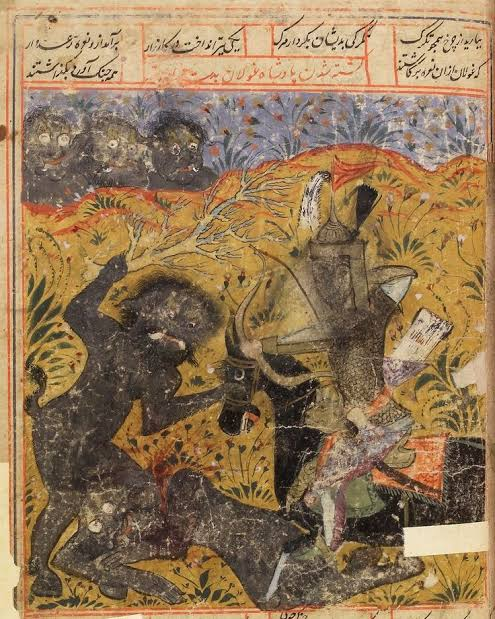
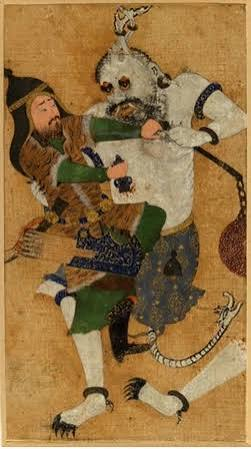
In early stories, the ghoul was believed to be a type of malevolent desert spirit or demon that preyed on travelers wandering through remote regions. These beings were said to inhabit abandoned ruins, caves, or lonely graveyards.
One of the most famous early appearances of ghouls occurs in the collection of Middle Eastern stories known as One Thousand and One Nights, also known as Arabian Nights. In these stories, ghouls are often depicted as dangerous creatures capable of deception and shapeshifting.
⸻
Physical Description
Descriptions of ghouls vary across different legends, but certain traits appear frequently.
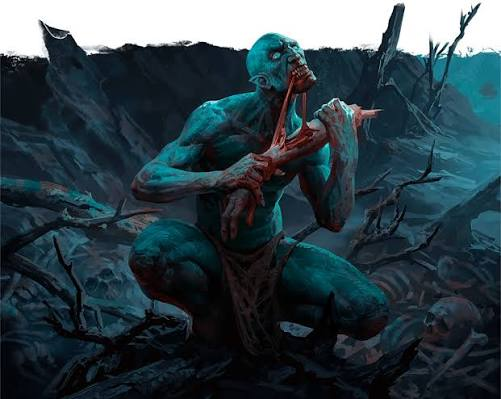
Common characteristics include: • A gaunt or skeletal body • Sunken eyes or glowing pupils • Long claws or sharp teeth • Pale, gray, or corpse-like skin • An unnatural appetite for human flesh
Many traditions describe ghouls as partially decayed, blurring the line between the living and the dead.
In some versions of the myth, the ghoul can disguise itself as a human in order to lure victims into isolated places before attacking them.
⸻
Behavior and Habitat
Ghouls are most commonly associated with places linked to death.
Typical locations include: • Graveyards • Burial grounds • Desert ruins • Battlefields • Abandoned settlements
Their most infamous behavior is feeding on human corpses. Unlike vampires, which drink blood, ghouls are typically portrayed as scavengers that consume the flesh of the dead.
In some stories they will also attack living people, especially travelers who wander too far from civilization.
Because of this connection with the dead, ghouls are sometimes considered a symbol of decay and corruption, representing what happens when natural boundaries between life and death are disturbed.
⸻
Shapeshifting and Trickery
One of the more unusual aspects of ghoul mythology is the creature’s supposed ability to shapeshift.
In many Arabic legends, a ghoul can take on the appearance of a human or animal. This allows it to approach victims without raising suspicion.
Some stories describe ghouls disguising themselves as lost travelers or beautiful strangers, luring victims deeper into remote areas before revealing their true form.
This ability made them particularly feared in desert regions where travelers might encounter strangers far from help.
⸻
Spread into European Folklore
The concept of the ghoul entered European literature during the 18th century, when translations of Middle Eastern texts introduced the creature to Western audiences.
European writers adapted the ghoul into Gothic horror stories, often portraying it as a grave-robbing monster that devours corpses.
One of the most famous uses of the creature appears in the works of H. P. Lovecraft, where ghouls are depicted as underground-dwelling creatures that feed on the dead and inhabit hidden tunnels beneath cities.
Lovecraft’s interpretation helped cement the modern horror image of the ghoul.
⸻
Differences Between Ghouls and Zombies
Although they are sometimes confused, ghouls and zombies are very different creatures in traditional folklore.
Ghouls are typically: • Intelligent or cunning • Independent supernatural beings • Scavengers of the dead
Zombies, by contrast, are usually portrayed as: • Mindless undead corpses • Created through magic, infection, or reanimation • Driven purely by instinct
The ghoul therefore represents a predatory creature that feeds on death, rather than a corpse that has returned to life.
⸻
Symbolism and Cultural Meaning
The ghoul myth likely developed as a way to explain and warn against certain dangers.
Possible symbolic meanings include: • Fear of grave robbers or body thieves • Cultural taboos surrounding the disturbance of graves • Anxiety about death and decomposition • Warnings about traveling alone in dangerous regions
In desert societies especially, stories about ghouls may have served as cautionary tales to discourage people from wandering far from safe routes.
⸻
Modern Interpretations
Today the ghoul appears frequently in horror films, video games, and fantasy literature.
Modern portrayals vary widely. Some depict ghouls as undead monsters, while others show them as mutated humans or supernatural scavengers.
Despite these changes, the core elements of the myth remain recognizable: a creature tied to death, graveyards, and the consumption of human remains.
⸻
Conclusion
The ghoul is one of the oldest and most influential creatures in supernatural folklore. Originating in ancient Arabian myths, it evolved into a global symbol of decay, death, and the dangers that lurk beyond civilization.
Whether interpreted as a literal monster or a symbolic representation of humanity’s fear of death, the ghoul continues to haunt the imagination across cultures and generations.