That’s true, but you can’t help but notice that when people coming from this background are taught English, they are usually taught that ‘male’ pronouns are the default.
If anything, I would support the removal of ‘he/him’ for all the backlash it will generate.
in france “they” invented “iel”, a gender neutral pronoun, to replace “il” and “elle”. Young people (some?) adopted it rapidly and were using it naturally but the state banned the use of “inclusive language” on all official communications (which includes schools)
i remember thinking that inventing a new pronoun, like they did, was a better solution than choosing one of the two as gender neutral
Outright banned, I’m guessing because blindly following rules by the book, but I think it’s not a move in the right direction.
In Spain people are trying to make neutral words by placing @ where a/o should go in the gendered words, I think it never made to any documentation but it wasn’t banned yet, at least.


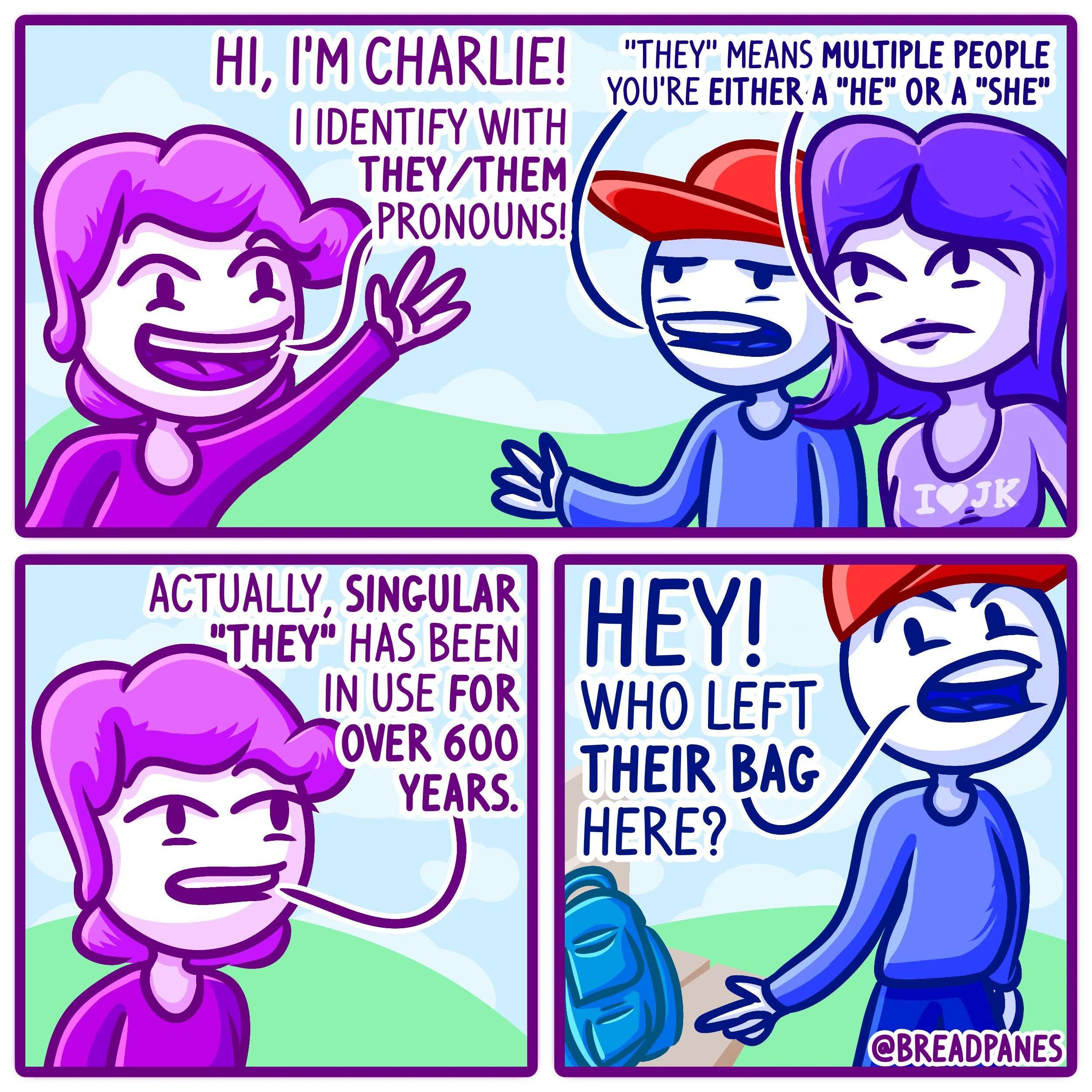
“he/him” probably isn’t he/him in their non-gendered language. In some languages there’s no he or she, there’s only a pronoun that means “that person”
Armenian, Persian, Tagalog, Finnish, Georgian, Turkish, Swahili &c
That’s true, but you can’t help but notice that when people coming from this background are taught English, they are usually taught that ‘male’ pronouns are the default.
If anything, I would support the removal of ‘he/him’ for all the backlash it will generate.
in france “they” invented “iel”, a gender neutral pronoun, to replace “il” and “elle”. Young people (some?) adopted it rapidly and were using it naturally but the state banned the use of “inclusive language” on all official communications (which includes schools)
i remember thinking that inventing a new pronoun, like they did, was a better solution than choosing one of the two as gender neutral
Outright banned, I’m guessing because blindly following rules by the book, but I think it’s not a move in the right direction.
In Spain people are trying to make neutral words by placing
@wherea/oshould go in the gendered words, I think it never made to any documentation but it wasn’t banned yet, at least.