

akkusativ my beloved <3
$5 says I’ll forget again in ten minutes.
Removed by mod
I’d like to start a petition to replace all these bad boys with “deez.” For example: Deez Frau ist mit deez Hut…uhhhh…getanzt.
This is so painfully close to being Loss. There’s got to be a way to juggle those squares around just right.
is this Das?
Is this Verlust?
deleted by creator
deleted by creator
deleted by creator
deleted by creator
6 articles?
amateurs…
meanwhile the polish words for “this” and “that”:

Same across other Slavic languages
English: We have one definitive article: “The”.
Me: OK, that’s nice and simple.
Scots Gaelic: Our’s is a little more complicated. We have “An”, which becomes “Am” for words beginning with B and P, for words starting with an h as the second letter (Th, Bh, Mh…) we use "A’ ", and for plurals we “na”, oh and if the first word in a word is a vowel, you slap “h-” onto it.
Me: OK, a we bit more complex but I can vibe with it, German what’s your Definitive articles?
German:
and if the first word in a word is a vowel
Damn, that sounds a bit complex /j (Thanks for the insight on how Gaelic definitive articles work btw)
Ist das Verlust?
god… ew.
Babe wake up. The German grammar political compass just dropped.
That’s actually helpful
You think this is bad you should see a chart that explains the prepositions across the cases… Jfc
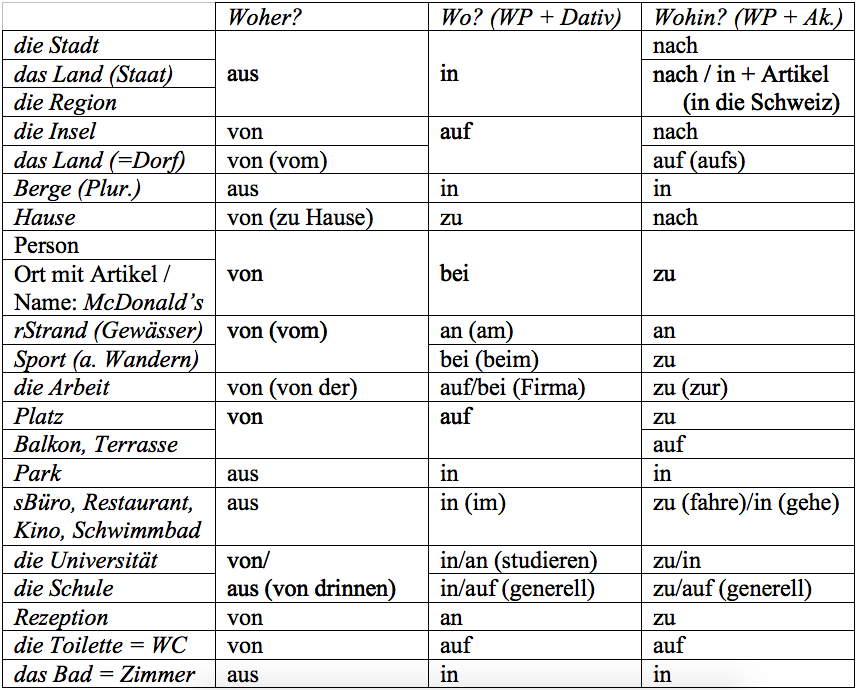
This actually makes more sense than the arbitrary grammatical genders. (Sure, english has it simpler with, “from where”, “where” and “where to”)
Until you introduce whom (and, occasionally, whose) and native speakers’ brains explode. It’s soooo easy: Whose brain was exploded by whom? His brain was exploded by her, not He brain was exploded by she. Native English speakers do understand cases, they just don’t know that they understand.
Yup, I’m a native English speaker who teaches German to mostly native English speakers, and it’s always a fun moment when someone in class realizes that we have cases in English, too (don’t worry, I do tell them, if nobody speaks up, I just give them the chance to figure it out themselves first).
Thither and thence/hither and hence/whither and whence are also counterparts to there/here/where, for older and/or more literary English
I’m a nonnative German teacher and holy fuck is this helpful. I learned each of these separately and at different times with great effort, but I will be sharing this with my students, because it’s way easier to remember with this visualization. Thank you!!
So. Much. Pain
I’m das/das