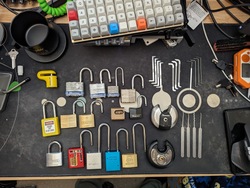

For me it’s probably speech therapy and everything pertaining to that. I’m yet to encounter someone on here who is one apart from me (in training).
What about you?
Hong Kong. I live there. There are a few of us here and there, but outside of the c/hongkong I’ve seen like 2.
Hey, I have very vague memories of being there. There are some photos of me being there, but honestly I can’t even recognize the kid in the photo that is supposedly me lol. I have an uncle from HK, he’s in the US now, just as with most of my relatives on the paternal side are also in the US. Me on the other hand was from mainland China. I still have relatives on the maternal side in mainland China, they’ve been on the US immigration waitlist for a decade now, and honestly, with current politics, they might never get approved lol. (And I’m not sure they want to come, they have better jobs than my parents ever did when they left… well see when the time comes. My cousins would probably exceed age 21 by then, so they can’t come with the aunts and uncles.)
The most I remember about HK is the 纜車 and 輕鐵. Also HK TV Shows are like 10x better than anything of the mainland stuff lol.
Game development; Addiction.
I have above average knowledge in a lot of areas due to browsing Wikipedia a lot.
I know more pure maths than most people in the world so there’s that too.
How do you have space in your brain for many areas while also delving into pure math? I feel math is soo deep that I cannot learn anything else…
It’s all a matter of time and focus. I have broad, shallow knowledge in other areas and narrow, deep knowledge in maths. Maths was my job for several years, so I was putting in a corresponding amount of time.
- People.
- Abrahamic monotheism.
- Divinity Original Sin 2: Definitive Edition w/ Epic Encounters
Where on the “knowing people” is understanding people can be too similar. Like Two Queen Bees arguing in a group is a classic but imo it happens to varying degrees in other personality types/facets like, "“Hey you guys both like guitar you’ll get along…” Awkward silence after 20 mins because some people put everything into their hobbies.
Want a feel if that is above or below water on the iceberg
That 1st one is a bit mean 👀😂
High pressure boiler systems.
My old man was a boilermaker/steam engineer for 50 years
Yeah I’m a mechanical/stationary engineer. I can do most of the hands on stuff too. I’m sure he could teach me a ton. Probably made a great living in those 50 years.
Ancient Rome.
Drones
Could a 5 oz drone carry a 1 lb coconut?
Nope. The material you need be able to lift a pound would be about 10 oz, battery included.
What about an African drone?
Insects and arachnids, although I’ve noticed I know more about those than the average person in general.
I’ve loved them ever since I can remember. My mom said I used to watch aphids as a toddler and she bought me a magnifying glass because she was afraid I would hurt my eyes. I’ve posted pictures of my green lynx spider friend living in my garden and folks online and off didn’t know they can grow their legs back or that non black widows eat their mates. I’ve also used terms like pedipalps, cephalothorax, or mentioned how to tell the difference between male and female spiders or mantises when casually talking about both, then I always have someone ask me to explain what I’m talking about.
My partner knew I liked insects and arachnids when we first got together, but I don’t think he realized how much until I built a raised bed garden and started taking lots of pictures of all the critters that show up. I have SO MANY pics of my green lynx spider friend.
Could you post a few? I’d love to see them!
These are the 3 posts I’ve made about my green lynx spider friend. I first saw her as a tiny little thing missing 2 legs, then watched her grow and catch bees and earwigs. Now she’s significantly larger with her egg sac all fat and happy. She even changed color recently to match the plant she’s on.
https://lemmy.world/post/34022565
Lovely! Subscribed to the comm. I’m an arachnid enjoyer as well, I can proudly say that I can sex a tarantula exuviae XD
That’s awesome! I love tarantulas, they are big cute fuzzballs.
Oh wow! Yeah, that’s a gorgeous animal!
Thank you for sharing those beautiful pictures!
You’re very welcome! I’m just waiting on the eggs to hatch and see all the little babies 😍
Get pictures when they arrive!
Sound design, mixing, and mastering audio.
Please prove me wrong, I’m so lonely.
How about mixing and mastering on tape? 👀
I hate working in the box
Never had the opportunity, but I love me some nice, warm, tape saturation
Herpetology is my thing
Hah ! Speech therapy was what I thought! I used to be an SLT, but you probably know more than me about a bunch of things, because it’s been a while…
What are your opinions on ‘social stories’ and how can they be utilized effectively?
Social stories can be really helpful for all sorts of things. But it really depends the individual and what their strengths and needs are. I’ve worked with children with ASD and they’ve been great readers, but struggled with verbal communication and understanding social expectations. For them having a short focused ‘story’ that explained how to ask a question in class, or how to share with a friend, can be really helpful.
I’ve also seen them be effective with adults with learning difficulties. But often that’s more because it trains the carers and family members around them. Not only does it fix the language so that the same thing is explained the same way everytime, and in appropriate language, but the process of writing the story and trying to articulate a piece of advice into concrete simple language can help ‘normal’ people realise how complex the ‘simple rule’ they want to communicate actually is. “don’t talk to strangers” is the sort of advice people give, but what’s a stranger, how does someone become ‘known’, what about a police officer? Or even a waiter?
That’s so cool! Did you have to go to university for that or was it an apprenticeship too? And US I assume? And what did you specialise in?
I’m super interested in neurology and voice therapy so I could see myself working in a clinic with dysphagia and aphasia patients, maybe also dysarthrophonia or Parkinson’s voice therapy (Lee Silverman Voice Treatment, but I’m a little sceptical). The former wasn’t really a focus of mine and a little scary given that you can literally kill a patient if you do your therapy wrong, but my last internetship at a clinic showed me how interesting the field is and how much quality of life is to be regained once you’ve treated the dysphagia. Didn’t really expect that. We just got a new class about laryngectomy which is also super interesting.
It was a university degree in the UK , and then I worked for the NHS for a number of years (until I moved to France and a much more relaxing job teaching at a university). I mostly specialised in pediatrics, particularly ASD and other developmental conditions. If I’d stayed with adults I would have focused on Aphasia and acquired language disorders. I found neurology very fun, and the way that damage could reveal the maaany faculties required for effective communication was super intresting to me.
LSVT is certainly well-evidenced and I’ve seen it be very effective. But it’s quite repetitive, so colleagues who did a lot of it sometimes complained of not getting a chance to be creative in their approaches, just having to stick to the protocol.
Dysphagia is a bit scary, but it makes such an incredible difference. Even many years after working with stroke survivors, every time I’m incredibly thirsty I think about the poor folks who were ‘nil by mouth’ and so desperately wanted a mouthful of water. Having a nurse swab your mouth is really not the same. Doing a swallowing check with them and giving the nurses permission to give them some fluids (even if they had to be weird and thick) completely transformed their day.
Good luck with your studies! It’s a very rewarding career!
Ah, that’s interesting. A common problem of studying logopedics in Germany that I’ve heard of is that you don’t get enough time for practical applications of the theory you learn about, hence an apprenticeship is preferred to a university degree. How was it with your course of studies?
I’m also interested in ASD, specifically coupled with late-talking children. I don’t think ASD is a separate subject in school but rather something a therapist needs to be interested in intrinsically and needs to learn about in additional trainings, but it’s just fascinating how differently it manifests in people and what effect it has on their speech development and interactions with peers.
But I’m not sure if I really want to work with children in general. I’d rather focus on conveying specific logopedic goals to adults who come to therapy out of their own volition and interest in their own betterment instead of constantly having to think about how to motivate children, how to put a therapy goal into a certain game that interests them etc etc. It’s obviously also challenging and difficult since you need a good feel for how to interact with children, but it’s just not for me. Currently trying my best with two patients I have (one has DVD, the other has a couple phonological language development disorders mixed in with some problems with speech motorics), but it’s just so much more challenging for me compared to the voice therapy I’m giving. Adults - that’s where it’s at for me.
Yea, LSVT is quite rigid, I feel like. It also goes against everything we’ve learned about physiological vocalisation which feels weird. I also don’t like that they’re kind of “cult-like” when it comes to advertising the effectiveness of their method in addition to the secrecy of the therapy itself. At least give a bit of an outline about what your method is about? Plus the costs… Sure, the course’s costs would probably be covered by the practise or clinic I’m working at, but the fact you have pay for knowledge in the first place is just so annoying. I get that people need to be reimbursed for their work and need to earn money to live, but it’s just so much money. But I guess it’s worth it if you have a lot of patients with Parkinson’s.
I hear you about dysphagia. I’ve had that same realisation in my last internship at a clinic. Probably around 95% of patients I’ve seen there had some form of dysphagia with varying degrees of severity, and it’s awesome to see how much the work we do helps them. To me it feels like it’s not a lot that we do outside teaching patients a couple swallowing maneuvers, stimulating their nerves with citric acid or spice, or adjusting their meal plan to something easier to process, but it’s so much more to them.
Thank you! I’m in last year of studies, so it’ll be quite stressful and challenging for the next half year or so, but I’m hopeful and happy to have found a profession that’s so multi-faceted.
Chemistry, physics, engineering, safety systems, and AI.
Cell Biology and molecularbiology (but i didn’t finish my degree), PC Games (i’ve been playing PC Games since the late 80’s), Piracy(see the answer before lol) and PC building (I’ve never bought a pc as a whole in my whole life except Laptops). Probably 56k Modems too, since i worked in costumer support for multiple ISPs - i still remember a lot of init strings for those and for different manufacturers, which is completely useless today lol
Plumbing, since I’ve been a professional plumber in both North America and Europe. Not the most interesting knowledge base but alas, it is what it is. Other than that, Age of Empires II maybe?
Bad day to be into computers
I once installed linux…
where’s the rest of the limerick, OP?
I once installed the OS of Linux,
But speedy, it definitely wasn’t.
The year '94, a 56k net install,
Mom please hang up the phone this instant.