For instance, a foot…is basically a foot length. So there’s this foot-measuring waddle some people do walking literally heel-to-toe to get a general sense of the space. An inch is kinda a finger width, etc (they’re all not perfect by any sense).
I’ve decided to just take the plunge and basically re-learn all my measurement systems because I’m seeing less and less of those being used. I started with just memorizing all the conversions but that’s literally just adding another step. Everything I own basically has settings to switch or show both measurements (like tape measures) so I’m just going to stop using Fahrenheit and the United states “Customary System” all together.
Any tips or things you’re taught or pick up on? There’s a funny primary school poem for conversion of customary liquid measurements,
Land of Gallon
Introducing capacity measurement to learners can be challenging. To make this topic more accessible and memorable, we can integrate creative and interactive activities into our teaching approach. Using storytelling, we can transform the sometimes daunting task of learning measurement conversions into a whimsical tale.
- In the Land of Gallon, there were four giant Queens.
- Each Queen had a Prince and a Princess.
- Each Prince and Princess had two children.
- The two children were twins, and they were eight years old.
Once students are familiar with the story be sure they see the connection between the story characters and the customary units of capacity measurement. If necessary, label the story pieces with their corresponding units of measure: queen = quart, prince/princess = pint, children = cups, 8 years old = 8 fluid ounces. You can reduce the number of customary units in the story based on student readiness. link
tl;dr looking for anything to remember the hierarchy and memorizing the metric and Celsius measurement system, sometimes explained in schooling or local sayings. (if I had an example for those systems I would give one lol).
That thing about the queen and the princes etc. is silly and just gets in the way. Don’t those people have anything better to do?
It could be useful at times, in my experience it’s just two people trying to remember this strange ass poem and end up having to look it up anyways.
You mean the pint’s a pound poem? It’s not even right, you know. A pint of water weighs about 1.04 lb.
didn’t know that one, was referring to the Land of Gallon one. Get to prince and princesses then everything would get fuzzy, recently acquired a hot-plate thing with conversions on it so remembered even less of it till I looked it up again.
The land of gallon thing is ridiculous imho.
Is there a temperature where a pint is a pound? Maybe near zero where it does wonky things?
The military and doctors in the United States officially use the 24 time format, there is something to think about (when we talk about accuracy and adequacy)
I switched over all my devices to 24 hour - phone, computers, cars, etc. I even change the settings on my wife’s phone sometimes. It’s so much easier to mentally read.
For daily use of temps, I found it best to just switch my apps and stuff to use Celsius. Then just made a point to take mental notes as to see what the current temps were on my devices. Especially when it was feeling too hot or cold. On days that felt nice, would see what temps they were and just kind of learned what ranges were between them (I tend to find 16-23C to be fine warm temps).
I can’t say exactly what the temps in Fahrenheit directly. But can give a range for friends and co-workers if they happen to ask me what the temps are outside (they obviously take the Celsius value as not helpful but they know I am going to give them). I can say that for me the “exposure therapy” of just using Celsius has been much easier than things like distance. I can kind of handle thinking of static distances, but I am not able to translate active things like speed.
I just learned some basic things and go from there.
A Ruler is Ruler 12 inches or 30 cm
A meter is roughly equivalent to a yard slightly more and both are like 1 big step
And then i just remember that theres 2.2 lbs per kg
1.6 kms per mile
Spreading my hand out, the distance between the tip of my thumb and the tip of my pinky is almost exactly 20 cm.
When I need to measure something like a piece of furniture, I “crab walk” my hand along its side, counting 20 cm for every step.
Fellow American convert to the metric system. Converting, in my opinion, won’t get you very far in actually understanding the measurements. To this day, the conversion rate is something I have to dig through my memory for.
For me what helped with the temperature scale was breaking it into chunks based on what I would wear, 10°-15° would be a pullover sweatshirt, 15°-20° a track jacket, etc, which got me to stop focusing so much on the conversion. Eventually you just get a sense of these things, I think that most people can only really feel a difference in air temperature of about 1°C. 0° being the freezing point cutoff is super helpful for judging things like potential road conditions if it’s wet.
For distances I first got the sense of how far things were in kilometers by being a runner and knowing distances around my neighborhood as to how they lined up with running a 5k, 10k, etc. For meters, at my height and gait, my stride length is about a meter long. A little bit on the shorter side of things, but it still helped me get an idea as to what a meter looked like in physical space, even if it’s off a bit. Centimeters and millimeters are a different story. Hard to find perfect analogs in the world, but you’ll find something eventually. I think for example long grain rice can be ~1 cm in length for example.
The biggest lesson in my own journey and seeing a lot of people online talk about trying to do the conversion is that people get overly concerned with precision when first making the switch. If you actually think about most of our daily interactions with measurements, they’re much more approximate. For example, the difference between whether it’s 71°F or 73°F is rarely pointed out. The temperature is just “in the low 70s”. We say that something is “about 20 miles away” which is almost an implicit 7-8 mile range. I would guess 80% of the time, this is how we interact with the units we use, so focus on that. No one is going to get upset if they ask the temperature and you’re off by a few degrees C.
In terms of mnemonics like US kids get in school for some of these things, everything in the metric system is a multiple of 10 from everything else, which is what makes it great. Also remember that at room temperature, water’s density is 1 g/mL, so if one of capacity or weight is easier to visualize for you, it’s a shortcut to the other. Standard disposable water bottle in the US is 500 mL or half a kilogram of water.
If only metric time had caught on too…
Good information, I’ve been doing the temperature thing more and more but for cooking I haven’t switched (gonna have to refigure the food safety guidelines so I’m not putting myself in danger on that one).
I think you’ve convinced me to officially do a marathon, that seems like a great and healthy way to consider the larger distances and wrap my head around it!
I’ve heard something like: 30 is hot, 20 is nice, 10 is cold and 0 is ice.
The biggest lesson in my own journey and seeing a lot of people online talk about trying to do the conversion is that people get overly concerned with precision when first making the switch.
YES! I think this is because they’re converting back to imperial units. You can always tell when someone was thinking in imperial because the metric units are like 17.4C or 8.12mm or 98.7km/h. For sure, things don’t need to be that precise. When I convert either way I always convert to a nice number. 100 km/h -> 60mi/h
It’s just like translating language, you don’t translate the literal words of a sentence, you translate the overall idea.
deleted by creator
You can walk a klick in 10 mins
A ruler is 30cm. Roughly a third of a meter.
Four cups to a litre.
A person who buys some material, Thinks to themselves managerial, I could use grams or litres, Maybe even amps or square meters, At least it isn’t Imperial.
Celsius:
0 is the phase transitiom temperature for water between solid and liquid under normal atmospheric pressure. 100 is the phase transition temperature between liquid and gas under normal atmospheric pressure.
knew about the 0 but not the 100, good shit.
Also, this one might be somewhat subjective since stuff can feel hot or cold depending on the person, but body temp is around 37C, with hands lagging behind a degree maybe.
Even a two degree difference is obvious, and helps with pets (cats have an internal temp of 39 and dogs of 37), and to a lesser degree, cooking.
Man you got some giant feet and sausage fingers lol
Get ruler. Hold your arm out 90degrees, Measure from the tip of your finger 1 metreacross your body, and rember where that Metre ends on your body. Then you always have a reference for 1metre
I was taught this to measure electrical cable. For me it’s from my left shoulder bone to my right finger tips (or the right shoulder to left finger tips)
We don’t really need any of those mnemonics because it’s a perfect systemMore seriously there is the “King Henry Died, Drinking Chocolate Milk” for the Kilo (1000) Hecto (100) Deca (10), Deci (0.1) Centi (0.01) Milli (0.001), but that doesn’t really help with measuring on the spot, aside from being able to get the prefix right.
There’s an average step being 1 meter, but thats less useful for people with shorter legs unless they want to join the ministry of silly walks.
One that I use often is converting meters per second to kilometers per hour. Because 1 meter per second is 3600 meters per hour or 3.6 kilometers per hour, you can actually skip the multiply by 3600 and then divide by 1000 and just multiply by 3.6.
But aside from time conversions, there isn’t really anything else that can help because it’s just moving the decimal.
Slightly related, you can tell how far away lightning is by listening for the thunder and counting the seconds. Sound travels at 346 m/s so every 3 seconds is roughly 1 kilometer away. But I suppose you can do the same for miles and count to 5.
Ty for the Mnemonic, definitely something I was looking for and even responded to someone else with the musical treble clef one. The thunder one will definitely help and something that can be passed onto kids (everyone basically knows the miles one). I’m gonna have to start compiling a list because all of you are awesome and there’s a lot of information on here.
Just wish signs in the states were posted with KPH as well but that’s extremely rare, I still associate maps with mileage and arrivals based on MPH so will be harder to transition that then anything else I imagine (120 miles away so about 2 hours on a hwy going 60 mph which is average for states).
Well something about 200 kms away will take 2 hours to get there on the highway going 100 km/h…
It’s not as neat as 1 mile = 1 minute at 60mph, but it’s still pretty easy to do the mental math.
For length, for an average male one meter is about one large step with extended legs (useful for distances), or the distance between e.g. the left side of your torso to the end of the extended right hand (useful for estimating the length of rope or smth).
For weight, it might be useful that 1 liter (that’s 1 dm3 but noone uses that except sometimes in scientific literature) is almost exactly 1 kg, and a typical cup fits 0.25 liter. A shot of alcohol is either 20 or 40 milliliters (0.02 or 0.04 liter) depending on where you are and what you order.
For conversions you just need to remember the base unit (e.g. meter and grams/kilograms) and the decimal prefixes. But you really only need milli (1/1000), centi (1/100) and kilo (1000) in day to day life. Then you simply shift the decimal.
I was confused on the “cup” part because I wasn’t sure if you meant like a typical drinking glass or the actual cup-customary measurement until I looked at it (another reason i dislike the measurement system…a cup of coffee is so damn vague at times). I’ll definitely remember the torso one.
Meter was easiest for me because it’s essentially a yard (when eyeballing).
Liters are easy because the soft drink industry picked up on it decades ago as a way to get people to drink more soda. You’d buy cans and 6-packs, but nobody bought a gallon of soda. But they would, it turns out, buy a liter of soda, and as we got more obese as a nation, 2 liters. Liters of consumer drinks are really common, and so easy to visualize.
yard
Except in US handegg, do people still use yards? It sounds old-timey to me now. Normally, I either hear people talk in feet or miles, but never yards. Even in school (California), I vaguely remember hearing “X yard dash” when I was a little kid, but that definitely changed to “X meter dash” as I got older.
Huh. I don’t really hear any units of length anymore, now that I think about it. Even the doctor measures my height in inches, not feet+inches.
I honestly don’t know. I don’t hear “meters” used at all, but the first thing that comes to mind about “yards” is the 2000 movie The Whole Nine Yards.
US football still uses yards, doesn’t it? I don’t watch football either. But I just checked a random football stats website, and it still uses yards to measure pro football stats, so… yes, I guess. A lot of Americans still uses “yards.”
A good base is knowing milli is a thousandth and kilo is a 1000 1000 milligram = a gram, 1000 grams = a kilogram 1000 millililters = a liter, 1000 liters = a kiloliter 1000 millimeters = a meter, 1000 meters = a kilometer
Plus, they’re all connected. 1 gram of water is 1 milliliter and takes up 1 cubic centimeter.
Ive never heard kiloliter, at that point I say a thousand liters, or a cubic meter.
A good base is knowing milli is a thousandth and kilo is a 1000
YES! I feel like a common pitfall people run into is trying to bust out all sorts of fancy prefixes, deka, hecto, centi, deci, etc and then people get overwhelmed by all of that.
The most common prefixes are kilo 1000x or milli 1/1000. That’s all you should focus on.
I mean centimeters is probably the most common in households and centiliters at least in cocktail recipes. But yes, you don’t really need deka, hecto or deci in your daily life and you can grow up not knowing they exist at all. It would also make things like tape measures too complicated to look at.
centimeters is probably the most common in households
I’m curious, where are you from? In the US, I’d say we think of centimeters as a pseudo-inch, so I think I understand why people would gravitate to centimeters here.
But do other countries use centimeters as much? I’m especially curious about really metric countries like Japan or (who else?) France? Germany? I wouldn’t be surprised if Canada or UK use centimeters.
Related: centimetres or millimetres
Most countries in the world are “really metric countries”. And yes we do use the cm a lot for measurements inside the 1-100cm range.
I’m from Germany and we use cm a lot. I can’t imagine not having anything between mm and m, the gap is huge. Those are probably the most used ones in daily life and km for distances farther than 999 m.
Here’s a common German tape measure next to a book, which is 20.6 cm (206 mm, 0.206 m) long:

Cool! Thanks for sharing!
Now that I think about it, I think I own a carpenter’s measuring tape. Maybe that’s why they don’t call out cm.
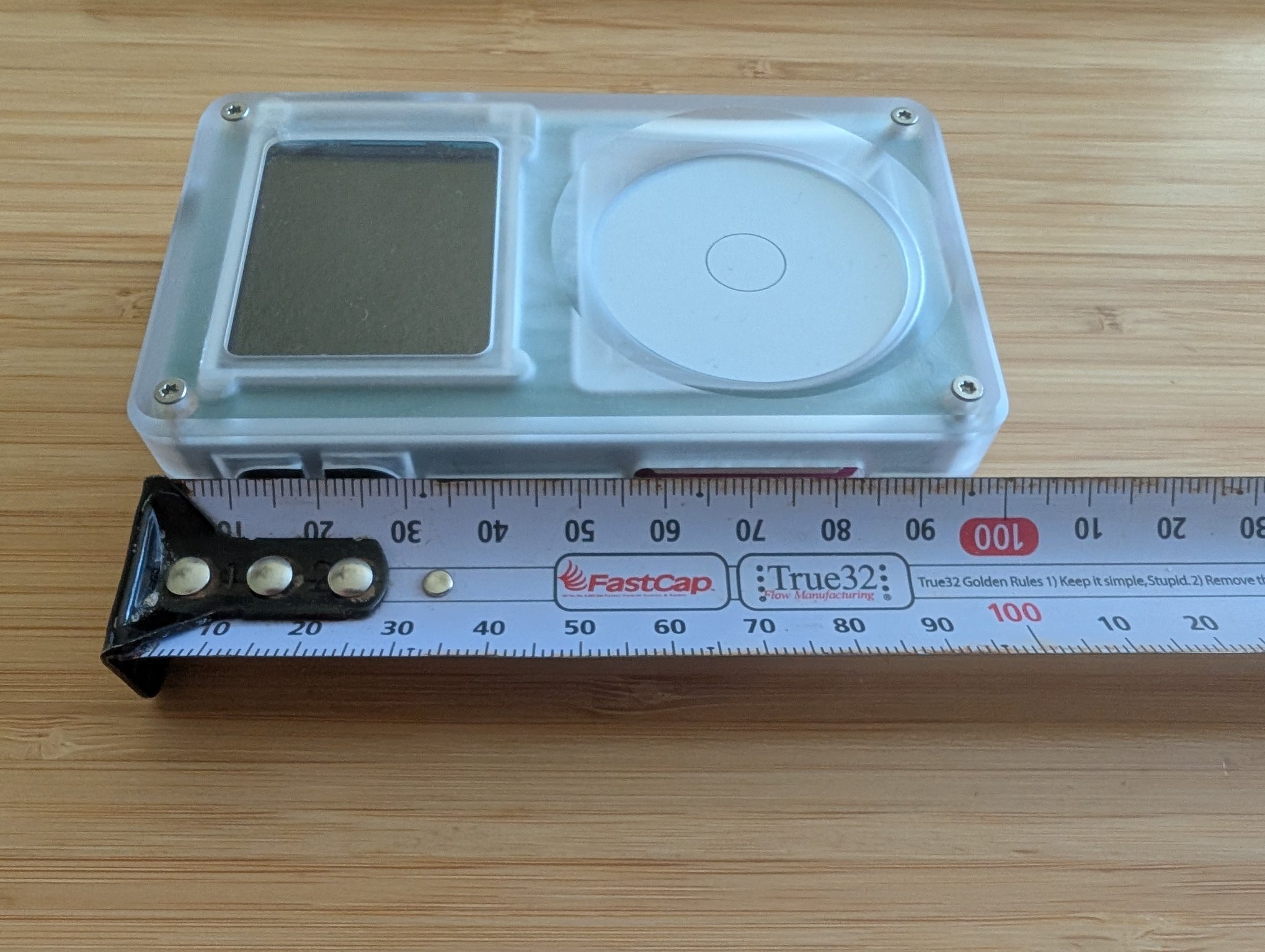
Also just to be clear, my measuring tape is definitely not a standard tape you can buy at a local hardware store. It took some effort for me to find a metric-only measuring tape.
I know some people in the building profession who habitually call out everything in mm, as oppose to most people where I am using cm for most household measurements. So I’m not surprised to see measuring tape (esp a carpenting one) ignoring the redundant cm
Interesting, I’ve never seen a tape measure like this. In the end it’s the same thing, just remove a zero and you have cm. That’s the magic of it.
But i understand now how you came to the conclusion that centi is not used that much.
I really hope the US will at some point adopt the objectively better metric system!
I really hope the US will at some point adopt the objectively better metric system!
Me too. I’m trying! 🤝
Plus, they’re all connected. 1 gram of water is 1 milliliter and takes up 1 cubic centimeter.
To heat said water by 1 degree celsius (or kelvin) you need one calorie. If one newton were to displace that water through the distance of one meter, the amount of work done would be 1 milijoule.