
You must log in or register to comment.
Oh yeah, this is for my in-laws. This is peak boomer tech right here.
Of the 200 elderly I see maybe 75% still use the book or a variation of it.
The best is when they use iPad notes or even their fucking contacts to save info lol
The best is when they use iPad notes or even their fucking contacts to save info lol
That’s awesome, worrying, adorable, and still more secure than using the same password everywhere.
Can confirm. I had to do a double take that I didn’t write this comment and just forget.
Removed by mod
I’ve not found anything better. Storing on my computer, or worse someone else’s computer, doesn’t seem safe.
The trick is to use code language, and don’t forget the code. Then you can use digital sources more freely, I feel.
It’s pretty safe. Competent password managers will be heavily encrypted. Having your passwords hacked is essentially unheard of. You don’t have to worry about it being on someone else’s computer as without your master password the password file is useless.
I think the biggest case was LastPass, and they did it by getting a keylogger onto a developers PC to get at their password, but afaik customer passwords were safe unless your master password was weak or reused from a breached one.
But, a notebook isn’t hackable at all. But then the people around you could potentially get into it, which is a far more likely threat for a ton of people.
Either way use 2FA at every site that will allow it.
LastPass’s biggest problem was that they were almost the first in the game, and mistakes/choices they made 20 years ago bit them hard when they got hacked.
There were two major issues with LastPass’s security model:
- Non-Password data wasn’t encrypted. So usernames and urls were visible by the people who stole the vaults.
- Passwords were encrypted with a number of iterations based on when the account was created, so older accounts were only run through a single iteration. The iteration process makes it much harder to guess the master password(by making it take a longer time). So single iteration makes it pretty quick to guess the password.
So with flaw 1 you could see what vaults might have valuable passwords like banks and crypto wallets. And with flaw 2 you could reasonably quickly break into the vaults of long time users.
So aside from their lax security allowing the compromise to happen in the first place (Nothing is fool proof), they weren’t providing the level of protection most people assumed.
More modern password managers like BitWarden fixed those problem a long time ago.
One master password to rule them all, One server to find them, One password to bring them all, and in the darkness bind them.
Yeah I use 2FA with the master notebook.
My ex kept her’s in an unprotected excel file. I never peeked, I was just surprised when I saw her accessing it on her laptop.
All the effort of inputting data into a password manager, but none of the security.
deleted by creator
Can’t wait to hand write my 32-bit passwords.
My handwriting comes with free encryption at rest. Even I might not be able to read it.
You haven’t changed your password for 30 days. Reset it now.
My understanding is that quantum computing has been taken into account for some modern cryptography. And that memory-hard cryptography basically defeats quantum computing solutions. There are a few methods, but one of them is just very long keys, it’s trivial to make a cryptographic key longer.
So sure, you could defeat some of that with a machine operating with 1024 entangled qbits, (which is… oh man… not an easy task), in which case, wow, congratulations. But what if I increase my key length to 100k? It might take an extra 3 seconds to check the key and log in, but it’ll take an extra 25 years for quantum computing to catch up.
Won’t longer key lengths increase the overhead for everything?
Yes and No.
Yes, everything increases in difficulty but the increases in difficulty are asymmetrical.
The difficulty of reversing a computation (e.g. reversing a hash or decrypting an encrypted message) grows much faster than just performing the computation (e.g. hashing a message or encrypting one).
That’s the basis for encryption to begin with.
It’s also why increasing the size of the problem (e.g. the size of the hash or the size of a private key) makes it harder to crack.
The threat posed by quantum computing is that it might be feasible to reverse much larger computations than it previously was. The caveat on that, however is that they have a hard limit of what problems they can solve based on the number of qbits they have.
So for example, let’s say you use RSA for encryption and someone builds a 1024 qbit quantum computer. All you have to do is increase your key size so that it would require 1025 qbits to crack, and then that quantum computer wouldn’t provide an attacker any benefit at all.
(Of course, they’d still be able to read your old messages, but that’s also a fundamental principle of cryptography; it only protects you for a period of time)
So… It’s a password book? Like, pen and paper?Not the best choice for storing passwords, but I’d be more willing to do that than trusting Amazon not to hold my passwords hostage with a digital service by them.
Still waiting for passkey support
deleted by creator
This isn’t even weird.
I think most security experts would recommend that you have your most important passwords written down somewhere, and then hopefully locked up in some safe or deposit box somewhere. You don’t need to buy an entire book for it, but some people like to spend money.
If this is for your less important passwords, then for the most part, writing them down is actually better. You won’t be as tempted to reuse your banking password for your social media. And some people like writing things down. A password manager is a better solution, but lots of people aren’t as good with technology and if they even let the browser remember it, they won’t know how to retrieve it later if they want to use a different computer, for example.
I have a letter in my safe in the event of my death that contains all my passwords and accounts. I have also slipped in a dead man switch that she’s unaware of that will wipe out my “collection of science”.
Does anyone else know how to get into the safe?
it’s a key entry, and yes.
My password-manager is a script that gpg-decrypts to XDG_RUNTIME_DIR and then opens it in editor, encrypts back on changes. Is that bad?
How do you syncronize it between multiple devices and operating systems?
Huh, what for? And if i would, maybe i should switch to pass (which is the same but in fancy and with plugins). I’m planning for years now to set up a little server i’ve built already…
we might laugh at this but I think this is useful. Even though I wouldn’t use something like this and I’d just use a regular dedicated blank notebook and my password manager, it can be useful to people who have problems with computers and can’t handle a password manager, yet may give pages with good templates to show how to record sensitive information.
Or for folks that would be otherwise leaving logins and passwords in a clear text file on their desktop (glares at coworker). It’s still clear text, but at least it’s air gapped. It’s not for me, but it’s certainly for someone.
Exactly this is the reason why I gifted it to someone. I’m already glad they don’t use 1 password for every website.
I have hundreds of logins, the convenience of a password manager is just too nice.
Ah yes, the keep ass
Self hosted and air gapped.
Quantum proof
Just as the Lord intended.
And very power efficient
The indexing and search need improvement.
As long as the notebook is in a locked draw I would pass this on an IT Audit.
Unfortunately it’s a combination lock, and the code is written on a post-it stuck on the front of the drawer.
The combination is 1-2-3-4-5!
How the fuck do you know my PIN number?!
That is still better than in a password manager with no access controls
Is it AI powered tho?
Would you trust Amazon or any huge corporation with all your login and passwords ?
Valid question. But this article is a physical book in your own hands. I am not saying this is safe or anything but has nothing to do with Amazon besides that they sell it.
I would trust them with my Amazon password.
Surely they didn’t backdoor a notebook?
No
PSA: Home use? That’s probably okay. Work use? If you’re in-office, this is a ticking time-bomb that can get you fired, one way or another. Use the company 1password or whatever you have access to, please. Thank you.
InfoSec likes nothing more than for you to tell them not to worry because you write all your passwords down and only read emails after you’ve printed them. 100% secure.
In my office I have a list that says passwords all nonsens and just as a decoy. I have a system that I use for rotation woth a visual reminder (by association, not directly) somwhere in my office
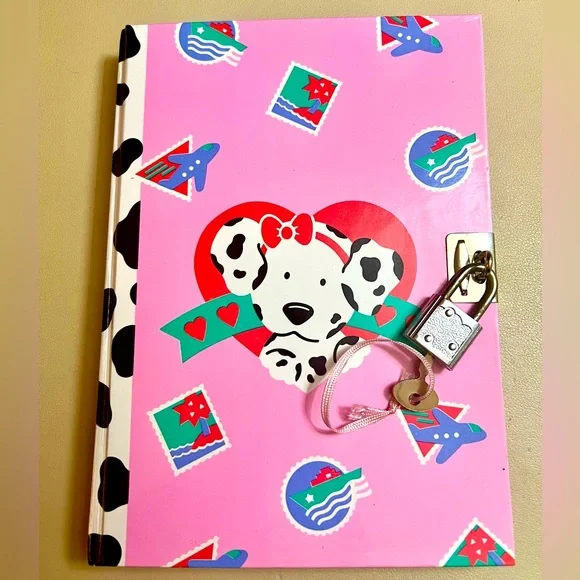
this is my internet password logbook
deleted by creator
you too can have it (not my listing): https://www.depop.com/products/christy19js-rare-1990-sanrio-spotty-dotty/
deleted by creator
It’s $55 (I’m assuming USD). Or “4 interest-free payments of $13.75”. On one hand, it’s expensive. On the other hand, it’s bloody brilliant!
Silly, you just posted a picture of your key now everyone can access your passwords
True, but honestly look at that lock, you can open that with a paperclip.
I still like it.
That’s exactly what I use. Chances of my house getting robbed is small. Chances of yet another data breach is very high - this year my data was breached at least 2ce that I remember.