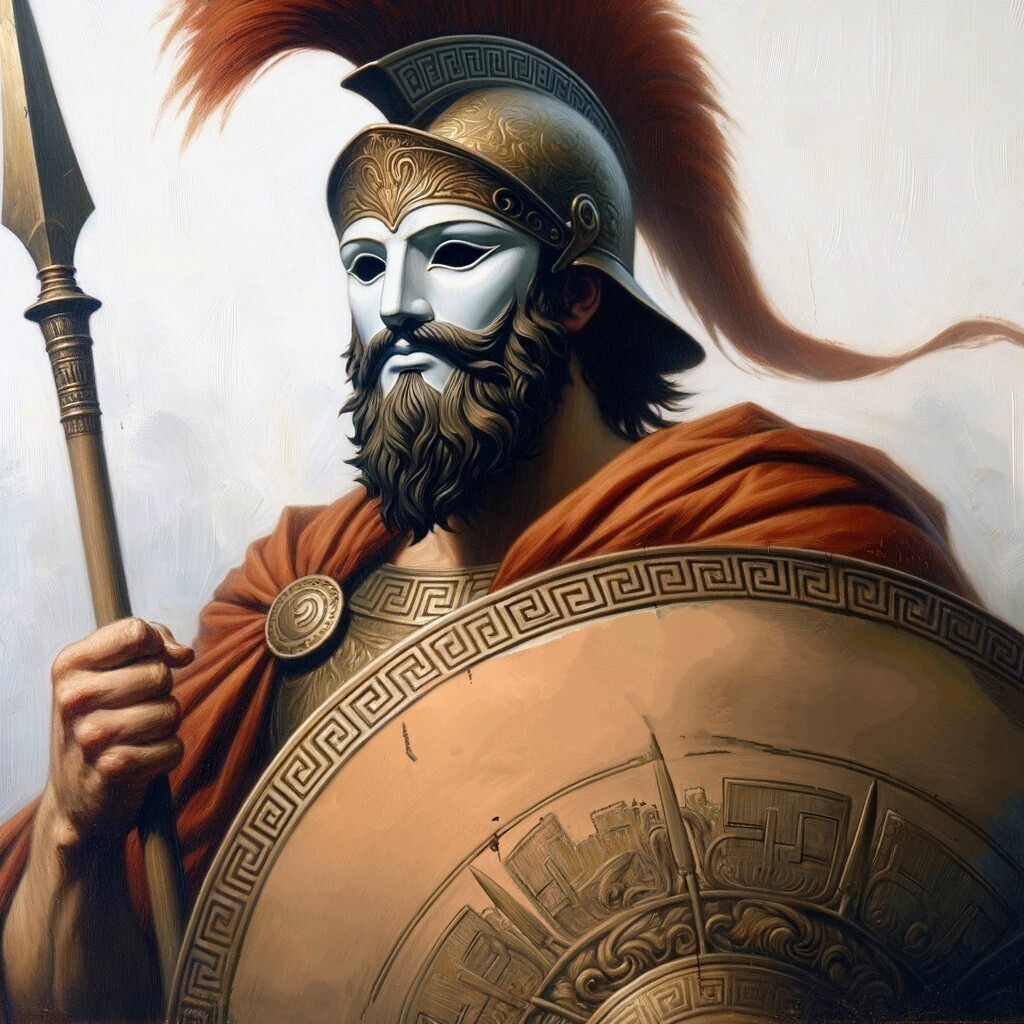
This puzzle is always presented as difficult, but why not just ask a known? If your eyes are brown just ask “Are my eyes brown?” You’d immediately know which one lies or tells the truth.
E: I missed the limit of one question.
deleted by creator
The difficulty comes from only being able to ask one question. It’s very easy to figure out the liar, but it’s much more difficult to figure out the liar and the correct door in the same question
In fact, the lying guard is a red herring. You get one question, and need one piece of info: the door. The canonical question doesn’t tell you which guard lies, nor do you care to find out.
Knowing who lies and who tells the truth doesn’t tell you which door leads to the prize and which to death.
Because there are two doors and only one question. If you ask a known question unrelated to the door you find out who the liar is but lose your opportunity to ask them which is the correct door.
But they gained no information on which door to choose ='(
Barb could simply kill Death-itself if choice was certain death room.
Opening the certain death door reveals a guy in a dark robe with a scythe: “Hey, what’s up?”
PLEASE BE QUICK ABOUT IT, I HAVE A LOT OF WORK TO GET TO.
“Uhh… Wrong door, sorry.”
I think you mean
HEY, WHAT'S UP?
Yes, but they did establish that one of the guards is no longer living and that giving barbarians riddles is dangerous for everyone involved.
The Barbarian got what they wanted, which is to have an excuse to rip another head off.
I mean, the Barbarian asked the one question and didn’t gain anything from it. Knowing which one is the liar doesn’t… help anymore.
Ah. Normally I see this with no limit on questions. You’re right. It’d only work with at least two questions.
You can ask both guards if an item is an item. “Does this cup contain fluid” would work, it doesn’t have to be a dead guy.
Well, obviously. But a barbarian might have a preference.
I’ve only heard it with one question, that’s the whole point. Otherwise you just ask a guard some trivial question (e.g. What color is the sky?) to determine which is the liar, then just ask which is the safe door.
The whole point is to get the information you need from a single question.
Maybe I’ve only seen a fucked up version.
“What would the result be of combining the following terms with “and”: the direction of the correct door, and the color of the sky?”edit: im stupid
Careful with that because “the wrong direction and blue” would still be a lie. So would “the correct direction and fluorescent yellow”.
And it has a bunch of assumptions about the sky and their perception and knowledge of it built in.
The scenario usually says that “one only tells the truth” and “one only tells lies”. at this point it becomes a question of whether a truth and lie in one sentence is considered impossible
Yeah, it’s impossible to say one way or the other because the setup is underdefined and leaves a lot of room for ambiguity or loopholes.
On that note, don’t beat yourself up or consider yourself stupid because of that. Even though it’s questionable whether it would work or give them room to screw you, I think it was a good creative solution to the riddle that I’ve never seen before. If you came up with that on your own, I’d consider that a sign of good potential. Nurture and refine that, don’t try to beat it down to avoid being wrong ever. (Haha I really hope you’re not like 50 or that might come off as really condescending rather than encouraging).
Like, thinking about it more, I think it can be resolved by changing the “and” to an “or”, at least on the lying side. Though that would open up the truth side to be able to sneak in a lie while technically telling the truth. But there might be another adjustment that would close the loophole entirely and give a solution that doesn’t require a reference to the other guard’s answer.
That assumes the other guy holds to his principles in the face of death. If I were the dm, the act of tearing the other guy’s head off and then threatening to do the same to the other one unless granted another question would at least grant advantage on an intimidation check
I’ve always seen it as outside of their control. It’s not that the lying guard chooses to lie, it’s that they’re incapable of not lying.
I mean, he could still lie. He’d just have to afford one more question
That’s why this is a brilliantly played barbarian. They think they are clever but will still have to do things the hard way.
That’s why it’s funny.
Ask either guard: “If I asked the other guard which door led to the castle, what would they say?” The answer is always the door that leads to instant death; enter the other door.
The third guard stabs people who ask tricky questions.
I feel like this is an XKCD…
It is
Then, rip both of them in half and knock down the safe door so that everyone after you immediately knows the safe route
If you rip them both in half, then two of your party are cursed to be the next two truth/lie guards. Roll for unintended consequences.
Time to rip the table, the DM, and everyone’s minifigs in half. It’s rippening time.
[sings]: I’d like to rip the world in half / for perfect disharmonyyyy!
I’m a fan of the revised Little Mermaid song: https://youtube.com/watch?v=fcbazH6aE2g
“So, you’re telling me I could have just greater restoration’d the guards rather than killing them? My god isn’t going to like this.”
This still doesn’t accomplish the goal of knowing which door will kill you. All you’ve done is determine which guard is the liar.
I believe that’s the joke. The barbarians intelligence isn’t usually very high.
I love playing low Intelligence high Wisdom characters. Because Wisdom governs stats like Perception, Insight, and Animal Handling. So your character will notice things that the rest of the party misses, but often doesn’t have the intelligence to put the individual pieces together.
Once played a high wisdom barbarian. He would notice things like traps or clues, but I would RP it with things like “Hey, why’s that wire stretched across the path? Someone is going to trip over that…” The other players very quickly learned to pay attention whenever I asked stupid questions, because it was usually my way of announcing “I noticed something that the rest of you missed.”
I wish our DM had real-life message to telepathically convey stuff to just one person.
In my group there would be literal zero chance of the others not listening to me if I ever threw a “hmm why is that wire there”, because they would’ve heard the dm either tell me due to passive perception or had me throw a roll and then tell me. So they know it’s a trap no matter if I want to rp it. Every time I get frustrated and question it, there’s this one guy who always has the reasoning and justifying at hand why they would know to do the right thing and to be fair they kind of make sense always, but there’s zero chance he’d come up with that just by my rp line alone without knowing for a fact it’s a trap.
I think that’s the worst kind of meta gaming. They are fully blind to the meta gaming there and just do it by instinct. And when you try and question, they always have a defense ready, even if it’s so wildly specific and unlikely but you can’t really fault it because they’re not stupid, the justifications hold, it’s just that the only way they habitually generate them is because they know what I know despite they couldn’t in-game know.
Like I’ve occasionally just left the thing unsaid in-game out of frustration and just reason to DM that there’s so much going on, my focus instantly switched to another thing and I forgot because I’m not very smart. So we all know there’s a trap but now nobody has told this to the others.
What do they do? The one guy fucking always comes up with some shit like “hmmm be wary, they must’ve laid traps here, hey you with good investigation, please look around and see if there’s one in this specific place for some reason” and the rolls of course often succeed because they always choose to best one to solve that.
But from rp perspective, we’ve walked this path for a while, and this thought only came up now, that it might be trapped? Just right now when you know, outside of the game, that there’s a trap?
I call bullshit and it frustrates me so much, there’s very little chance of anything interesting ever happening in-game because we seldom miss anything or do the wrong things, because “somehow” we always happen to do the right things no matter who notices things in-game or rolls or whatever, no matter how much any of us attempt to rp it, somebody just meta games it without it being explicitly or admittedly meta gaming and gets all defensive when questioned and because they now know everything, can figure out an explanation the DM can do nothing but accept because it makes sense, now that they know to pull the right shit out their ass.
Ugh. It’s not even a big deal, our group is fun and the adventuring isn’t bad, these things don’t happen often enough for it to really affect things, but god do I hate it. This ended up being a rant, I didn’t even know how much I get frustrated with it until I just now read this back. Jesus…
(Split it up into another comment since it’s a different idea).
Another thing that DMs can do is punish meta gaming with things that go against expectations. Like maybe some secret doors are actually the release mechanism for some damgerous monsters that act as security when someone sounds an intruder alert. Or the listen check is to see if you can hear the siren’s song in the distance as you pass a nesting area.
Maybe the pressure plate is connected to a power source and system to bring the facility the players just entered online, turning on lights and opening doors that are otherwise locked when it’s in mothball mode because the wizards who built it assumed the secret entrance would provide enough security. So while it looks like a trap, it’s just some home automation that would make everything easier. Then if they skip the “trap”, gotta have a scene where they return with someone else who does step on it to leave them wondering if they made a mistake or if they did it the more interesting way.
I need to find a group one of these days, it’s been too long since I’ve played a tabletop RPG and I was a naive power gamer when I last did, so I’m curious about playing a game without min/maxing.
Though the best game I’ve played was with a friend who wanted epic shit like in Devil May Cry. There were no real rules, there were rolls but pass or fail was more of a vibe check than anything specific because the more you described a cool action in detail, the more likely it was to succeed. It was pretty awesome and fun.
For context, DMC features epic scenes like a man-sized entity fighting and beating a skyscraper-sized titan, blocking bullets with swords, and I can’t remember if this is actually in one of the games but even if it isn’t, it kinda shows the level they are on, but I think there’s even at least one scene where a character uses bullets as stepping stones to get within sword range of someone firing down on him from high up.
Yeah, I agree that having a secret communication channel between the DM and players is good because it goes deeper than just meta gaming: there’s also meta meta gaming.
As in you hear a piece of information that your character would have no way of knowing and this piece of information makes the correct tactical option obvious. It might not have been as obvious before, but now that you know, you can’t unknow it (at least not without an even more severe disruption to the game). So does that mean you can’t pick that now obvious option to avoid meta gaming? What if your character probably would have chosen that option anyways? Same thing for trying to do something that would reveal that information to your character, would your character have done it without the information? Should you just pick a bad option now because any good option is meta gaming?
I don’t think there is a good solution once anyone knows about the information. Hell, even your barbarian’s decision to not say anything could be considered meta gaming because you were doing it in response to how the other players were acting and justified it afterwards just like they are doing. Avoiding the meta gaming option is still meta gaming, it’s just from a place of not being able to help but meta game.
It’s like playtesting magic decks against another one of your decks alone. Sure, you can see some things like how well the mana ramp works, how big of a threat you can get on the board relative to your opponents, but when it comes to interactions, you know exactly what spells you should counter or ignore, what might happen if you choose to block or let an attack through. There’s no tactical surprise or bluffing, which can both play a big role in the game.
When I DMed, I liked to have some rolls from the players ready ahead of time, because I found even “roll a spot/listen check” gave away too much information on its own. Pass or fail, it was a signal to start doing some active searching because there’s something of interest in the vicinity. So instead I’d just use the early rolls and cross them off my list as the players made passive sensory checks and only mention anything if the roll was high enough.
Then notes can be passed with the information to those who know it, plus extra nothing notes sent from time to time, maybe with a promised reward if they don’t say it’s a nothing note so the meta gaming that results just wastes time and discourages people just reacting to notes.
So you ask them which way leads to the castle and you don’t pick the way they say.
If we’re assuming that these things are actually bound by some kind of rule stating they literally cannot lie or literally cannot tell the truth.
That is why it is better for the barbarian to snap the wrist of the one guard, so that you can ask them a question still or you ask the first guard which way to the castle then rip his head off followed by asking the second guard if the first guard is dead. You will get the question from each guard and know which one tells the truth.
Only one question allowed, they said. I don’t think it’s solvable.
It is solvable. You ask one guard at random, “Which door would the other guard have said leads to certain doom if I had asked them?”
And no matter which guard you ask, go through the door they answer with. If it was the truth teller guard, they’ll tell you which door the liar would have said, and if it’s the liar they’ll lie about which door the truth teller would have said.
Yes, you’re right. I was thinking he could lie both about what the other guard would have said as well as what door leads to doom, but the other guard can only give one truthful answer.
My favorite take on this:

That last question is ambiguous enough (in this specific scenario) that either answer would work. It’s both true that the other guard can’t tell her something happened (due to being dead), while the other guard would have said that something did happen if he had been able to. So it’s a meaningless question but the wife doesn’t know that since she doesn’t know the guard is dead.
Which just adds another layer to the joke lol.
Jajaja no creo
JAJAJAJAJAJJAJAJAJAJJAJAJAJAJAJAJJAJAJAJJAJAJJAJAJJAJAJAJAJJ almighty
Jajaja
This doesn’t help the party decide which door to go through at all
So the traditional answer here is to ask them to point at the door the other guard will say is safe.
However, I’m curious, does anyone know of any other valid solutions?
“Is the guard that tells the truth standing in front of the safe door?” If they say yes, you go through their door, if they say no then you go to the other one
I did not think this was going to work. Som bitch it does. Crazy
That’s wild that this works. What.
If they say yes they can still be a liar.
Right, in which case the door they’re in front of is the safe door because they lied and said “Yes” when asked if the truth teller is in front of the safe door. And if they tell the truth and say yes, they’re still the person in front of the safe door. By asking it that way they make it so it doesn’t matter if they’re the liar or not. “Yes” means that person’s door is safe and “No” means you want the other door, no matter who you ask.
I was thinking: he could lie about the guard but not about the safe door, so he would still be lying. But that’s technically a half-truth, which this particular guard isn’t capable of. So you’re absolutely right, thank you.
Could probably do something clever with XOR.
Is exactly one of the following statements true? You are the liar. Your door is the safe door.
How is that a valid answer, they would both point at a different door
They will both point to the bad door.
If asking the thruthful guard, he will point to the door the liar says is safe, which would be the bad door. If asking the liar, he would consider what the thruthful guard says is safe, then reverse that answer, still ending up on the bad door.
They cancel out, so whichever guard you ask doesn’t matter.
Wouldnt they instead keep pointing like clockwork towards different doors seeing that they would have to adjust for the other guard?
No because them pointing at a door is answering a different question than the one that was posited in the question.
The liar, knowing the truth-teller will point to the good door, points to the bad door.
The truth-teller, knowing the liar would point to the bad door, points to the bad door.
Either way, you take the one your guard doesn’t point to.
But they would have to keep adjusting since they both have to answer acco4ding to what the other one says
The question we ask if “What would the other guard say if I asked him which door is the good one?”
Liar says Bad Door
Truther says Bad Door
Now, for their answers to update, they would have to ne answering the question, “Which door would the other guard say if I asked him ‘Which guard would the other guard say is the good door?’”
We want a guard to answer “What would the other guard say is the good door?” Regardless of how they answer our “outer” question, the answer to the “inner” question (“which is the good door?”) doesn’t change.
Liar doesn’t care that Truther would say that “Liar would say the right door is the good one,” Liar is being asked how Truther would answer “Which door is the good one”.
I know I basically just said the same thing three times. My brain isn’t working to break this out the elegant way I can’t quite assemble. But hopefully some part of all this helps. The crux is that the question that they are imagining the other guard’s answer to is not the same question they themselves are being asked.
The answer is stable because the liar will always say the bad door is safe and the truth teller will always say the safe door is safe, therefore the liar will always say that the truth teller will direct you to the danger door and the truth teller will tell you the same.
I tried to add some self-reference to the question to make a paradoxical answer but can’t see a wording that even causes something like “this statement is false”, at least not one about which door to pick.
Only ways I can think of start with the paradox right in the question. Like “If the other guard said, ‘this statement is false’, would you believe him?”
Sucks someone downvoted just for asking questions to better understand this less than straightforward thing. I’ve always believed that if you think something is wrong, you should challenge it, because even if you are wrong, the resulting discussion can help you understand why your previous perspective was flawed, which might then cascade to other things you didn’t realize you were also mistaken about.
no because the question was which door would the other person say is safe, they both point to the not safe door
One question per group. Also now you die because murder.
Barbarian just ripped the head off of one of the guards, you think the other guard is going to be able to arrest them?
“Answer our questions or you’re next.”
The first time I encountered a version of this riddle it actually wasn’t Labyrinth. It was an old black and white episode of Dr Who aired on PBS when I was a little kid. Same scenario but if I recall, robots instead of guardsmen. I think the good doctor solved the riddle in the typical way of asking one robot what the other would say. I’m looking for it now but I can’t find the scene.
Pyramids of Mars
Yes, thank you!! Found the scene itself since the whole serial is apparently on youtube: https://youtu.be/lLBHbt9QYFU?t=5458
Funny how my memory had it in black and white. And I remember the scene being much longer. I watched it when I was like, 9.
Maybe your childhood TV was black and white.
Length, brains just love to add details that dont exist
I got an unexpected laugh from Rick and Mortys take on this. His answer was “you ever fuck this guys wife?” And watched them fight to the death.
deleted by creator
Ah man, I miss Rick and Morty before you know… everything.
They replaced the guy didn’t they?
Yes. And the show got a lot better. The voices are perfect matches and the writing is a lot less… “Eccentric” (while still being absurdist)
Agreed. The writing for the last couple seasons has been insanely good.
I think the eccentric writing was amazing. Like how the old Southpark was also amazing.
I think I agree.
And the surviving guard will most definitely answer a 2nd question despite the rules.