And probably not at all practical.
Eeehhhhh — yeah
Aerogel. So not gonna be good for mobile applications— cars etc.
But might be workable for static applications???
Team expects, may be useful, could be used, prototype, are currently investigating and so on. Cool piece of technolgy, but no even mention when they’d expect that to be commercially available, if it’s even possible to manufacture in commercial scale. Like many other new battery chemistries and technologies, it shows promise and makes a good headline, but at this point that’s pretty much it.
To be fair, commercial long-life nickel-iron batteries are already being sold for grid storage. The main reason they aren’t used more widely is they cost more up front.
That’s ok, because they still cost less than alternatives over the full life span of the battery.
The risk is that the higher purchase cost required will likely be wasted as new battery tech surpasses it long before its life is over.
So for now, it’s all about weighing opportunity cost, tech lock-in, and early obsolescence
Well tbf this was a university lab which isn’t focused on commercial production but just trying to prove their experiments
Eh, give em the clout they need to develop it further.
Just like with all of these headlines, it will not charge in seconds outside the lab without cryogenic cooling systems. Pack density is already largely limited by cooling systems, so everyone looking for faster charging and higher range should really be focused on superconducting tech more than cell chemistry
The technology uses nickel and iron clusters smaller than 5 nanometers, meaning 10,000 to 20,000 clusters could fit within the width of a human hair.
By using these dimensions, the researchers increased the electrode surface area, allowing almost every atom to participate in the chemical reaction. This efficiency enables the battery to reach a full charge in seconds rather than the seven hours required by historical versions of the technology.
5nm nano fabrication will cost a fortune. this week’s cure-all battery.
Nano chemistry is entirely different from nano fabrication. I haven’t read the paper but most materials like this are made by mixing chemicals in a beaker and/or heating them in a furnace.
Yeah, that’s exactly what they do. You can click through to the original article and then the paper abstract if you want, but yeah they mix graphene and protein and heat it.
Every battery charges in seconds
the device achieves an excellent specific energy (47 W h kg−1) and superior specific power (18 kW kg−1)
I’m not familiar with this stuff. How does that compare to popular lithium batteries?
Poorly. According to a random Wikipedia query, commodity lithium ion is ~270 Wh per kilogram. So this is around 20% of that, according to the above.
“Excellent” may be in comparison to other byzantine specialty battery chemistries, but lithium ion remains resolutely enthroned.
It might be cool for storing solar energy for your home, though. We don’t need to always carry the battery in every use case
Home storage generally uses LFP which is around 170 WH/kg. 270 is NMC which is used in stuff like mobile phones where the trade offs are different.
Nickel iron is typically used for off grid solar energy storage. Weight doesn’t matter at all since the battery won’t be moved. The most important thing is lifetime. Traditional nickel iron batteries last for decades and can be refurbished.
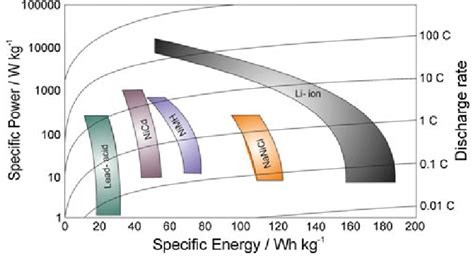
Looks like it’s more like NiMH than LiPo, but higher power than NiMH (which I guess lines up with their claims of charging super fast).
I looked around and found that lithium ion batteries will range from 100-270 Wh/kg and up to 10 kW/kg.
So these particular batteries are sort of an improvement, less energy by weight but better power if I understand correctly. Definitely not an expert.
Most li-ions land around 120-160 W-h /kg. So much poorer, but much cheaper on density
The specific power (power density) is kind of crazy though. I think most li-ions top out around 10kW/kg, any more and they will overheat and boil their electrolyte which usually leads to fire.
If it lasts 30 years, it will not fly with the industry and the concept of planned obsolescence.
Then a new player will become dominant in the industry.
Ooh, they’ll figure a way to make it clock out on the last monthly payment. One little chip will do, or just a few lines of code in the right place.
Sounds like a good candidate to go into pagers.
Someone will find a way to make it a subscription service that stops working when a certain MW is exceeded
We are heading for a subscription LIFE.
Did you ever see the movie THX 1138 (1971)?
The police stop chasing him when his “value to society” runs out.
My solar panels have a 25 year warranty.
this is one of the bigger changes in battery tech i’ve read in a while. i’m curious about their beef aerogel tho. i have no personal problem using it (beef is going to be used, regardless, so ethically we should not waste the beef we’re producing) but i would love to see this battery tech become vegan. in part so i can calm the little part of my conscious, and in part so we don’t have to have an ethical debate about batteries.
Per the article they are working on that, which is good since cattle farming is not exactly eco friendly.
The researchers are currently investigating the use of other metals with this nanocluster fabrication technique. They are also testing natural polymers as more abundant replacements for bovine proteins to facilitate potential manufacturing.
Meanwhile my UPS taks 8 hours to charge and lasts 8 minutes.
UPS batteries are something i don’t understand either. Why have they not changed with all the new tech we have now? Is it just still made of the best chemicals for their use and to then be recycled or something?
There are newer LFP portable batteries with <10ms UPS switch times that charge quickly and will keep the power on longer. They also have much longer battery life’s (3000+ cycles) , and LFP cells don’t degrade the same when kept at 100% like other types, although you should still cycle them a few times a year.
Bluetti makes some, the elite series has their latest UPS features. The non elite are slower and noisier.
Its all fairly new and have been improving year over year. For example, earlier models may not have switched back on if power was out for a long time and it fully drained the battery. Now some models can turn back on.
Edit: more details.
Maybe sodium ion will be a suitable replacement.
UPS batteries need to be fully charged all the time. Lead acid batteries like to be fully charged. Lithium batteries need to be stored around 50% charge to have a long lifetime.
This is theoretically something sodium batteries would be good at right?
Aren’t they not as sensitive to storage voltages? They are almost a perfect lead-acid replacement. Plus a UPS is a great usecase because it doesn’t matter if it is 33% bigger to achieve the same capacity.
Lead batteries are also cheap.
And mine take ~30 minutes to charge. This person may want to replace their batteries.
They’re also trustworthy, reliable technology. Why change what isn’t broken?
Charge time depends on the UPS. The cheap consumer grade ones usually have a float charger that takes forever.
It’s brand new, I’m reading directly from the instructions, if it only takes 30min to change they should say that and it’s not by design. It’s a CP1500PFCLCD

It makes sense to me to have low power chargers on a UPS. Once your power comes back online, it needs to deliver enough juice to power everything plugged into the UPS plus the battery charger. A fast charger would be more likely to trip a breaker.
Yes, lead acid is very reliable and very recyclable.
We’ve been seeing claims like this for years and every time it’s been total bullshit. 99.9% chance it is this time as well, but enjoy the thought experiment.
And yet we have somehow gone from rechargeable phone batteries that were about 3 times bigger than the phone I’m typing this on and had a capacity of about 500 mAh to where we are now with the battery that powers my phone being some small part of it and having a capacity of 3000 mAh, with only two major technology changes on the way. Meanwhile, we’ve been using the same technology for over a decade and the capability keeps getting better. I wonder why that is?
Those while are great are just pushing the tech in tiny increments. It’s still the same tech. Kinda like how ICE vehicles got better and better, but they still use non-renewable energy.
This tech we need, is the leap from ICE to electric vehicles…vs an old model T to a modern Corolla.
An order of magnitude more power in the same form factor in 30 years isn’t a tiny increment. It was certainly a number of tiny increments to get there. And for those big leaps you’re so desperately looking for, it isn’t one little group sitting down together thinking how they’re going to do something. There are decades of research building out a number of tiny discoveries, combined by a group at an opportune time to put it all together so everyone can talk about this momentous leap that they, from the outside perceived as something new that sprung out of nothing.
Yea that again, doesn’t negate what I’ve stated. Tiny increments throughout a technologies life is great, just like ICE vehicles, but it’s tech from the 70s and we need the next leap forward.
Fusion power is based on the aeolipile and work by Marie Curie. Just because you don’t see the all the incremental steps connecting those devices doesn’t mean they aren’t there.
That’s like saying the wheel was invented thousands of years ago…you know what I’m talking about and are just being pedantic about it.
If I have seen further [than others], it is by standing on the shoulders of giants.
Once upon a time, that giant invented the wheel.
Fusion power ain’t there yet though, bad example?
Fusion power isn’t commercially practical. We could make a working fusion plant right now. It would suck and provide almost no power, but we could make one. And the difference between the one we can make today that barely works and isn’t useful and one that would be useful will be some number of additional incremental steps between where we are today and when that would work. Which is exactly the point. And your attitude of, well we aren’t using it today, so nothing has actually been done, is what I’m criticizing, so thanks for making the point even more obvious.
This tech we need, is the leap from ICE to electric vehicles
Great news! I heard a rumor that they’re going to start making electric vehicles next week.
Xn
Perfect!
yep.
SHould be a blanket ban on miraculous battery technology stories until they are actually in production and proven.
Cause lets face it, if one of these miracle batteries using cheap, common materials with amazing capacity and longevity was real, it wouldnt take long for companies to jump on them.
Research into the lithium ion battery started in the 1970s and they only became common in EVs in the 2010s.
So yes, it would “take long” for companies to “jump on them”.
Sometimes it’s not pure bullshit, but instead intentionally misses details
Like articles going “new battery lasts 1000 years in one charge!” - which is true of Nuclear Batteries, because they give basically a maximum of 1 watt of energy per hour. (Which is useful for very specific purposes like a pacemaker)
Are you saying Grandma’s a WMD?
Yes, yes I am
Careful, 'Murica is gonna invade your grandma to bring democracy to her organs.
I hope, but 90% of these never pan out.
It takes decades for innovative products, or seemingly useless ideas, to be commercially viable. That’s why the best response, when asked what is the purpose of doing research on seemingly useless topics, is to say “I don’t know, but I know it’s going to be taxed someday.”
Just make one large enough to power my house for 2 weeks and let me use solar completely detached from the grid. I’ll put it on the side of my house.
maybe in a shed off the side of your house? i would not want that fire attached to my structure in a failure.
It’s not lithium. This battery wouldn’t be a fire hazard.
if it’s charged it’s a fire hazard. i’ve seen nickel cadmiums go up in weird ways. we’re talking about your largest investment, prudence is warranted.
My house is charged. It’s a fire hazard.
It is waaaaaaay more likely that they’ll be an issue with an EV or ice car in your garage to catch fire than a storage battery like this. This or sodium batteries can’t have a runaway thermal “event”. The chemical reactions aren’t there for it.
That’s doable right now pretty much, in that the cost of existing batteries is in proportion to the other stuff you’ll need.
The sodium batteries rolling out to market right now should be good for it. Just waiting for them to get out and into use for a few years to make sure their isn’t any immediate unforseen bugs. I just want a 30 year battery and not a 10 year, and time itself degrades lithium based batteries quite a lot. They can make one that will last over 500,000 ev miles, but don’t count on it doing it and lasting 20+ years.
However, this technology does not yet match the energy density of lithium-ion batteries.
It would be good if you actually told us what that energy density is…
Two important parts of a battery are how much energy it can store in a certain space and how much it weighs. If it is bigger and holds the same amount of energy that might be ok for a non mobile storage if it costs less, like a house. If it weighs more for a certain energy that wouldn’t be useful for cars and mobile things but might be ok for small things where the weight is negligible anyway. For cars you want a small energy dense battery that is light as possible
Technically, a copper wire is a battery that charges in (a very tiny fraction of ) seconds.
So a 3 megawatt charger can charge 50 kWh in one minute. That’s some serious power.